
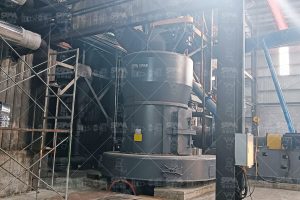
Introduction The production of food-grade talc requires specialized grinding equipment that can achieve the precise particle size distribution, purity, and consistency demanded by food safety standards. Talc, when used as a food additive (E553b), acts as an anti-caking agent, release agent, and texturizer. Its effectiveness and safety are directly linked to its fineness and freedom […]

Introduction: The Critical Role of Graphite in Aerospace Manufacturing The aerospace industry demands materials with exceptional properties to withstand extreme conditions while maintaining precision and reliability. Graphite has emerged as a vital material in this sector due to its unique combination of thermal stability, mechanical strength, and electrical conductivity. From thermal protection systems to electrical […]
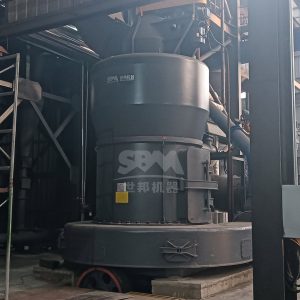
Introduction The production of fast-curing cement represents one of the most demanding applications in modern construction materials manufacturing. Achieving the required rapid strength development necessitates precise control over clinker grinding parameters, particularly particle size distribution and specific surface area. The pulverization process directly impacts hydration kinetics, with finer particles accelerating early strength gain while maintaining […]
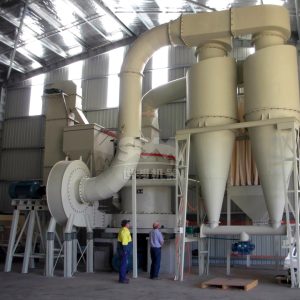
Introduction Bentonite, a naturally occurring clay mineral composed primarily of montmorillonite, has gained significant attention in environmental remediation due to its exceptional adsorption capacity, swelling properties, and cation exchange capabilities. The effectiveness of bentonite in soil and water remediation processes is highly dependent on its particle size and surface area, which are directly influenced by […]
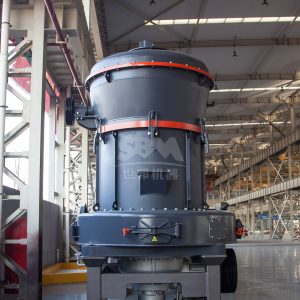
Introduction Bauxite, as the primary raw material for refractory production, requires precise grinding to achieve optimal particle size distribution and chemical properties. The selection of an appropriate grinding mill significantly impacts product quality, production efficiency, and operational costs. This comprehensive guide explores the critical factors to consider when choosing bauxite grinding equipment for refractory applications. […]
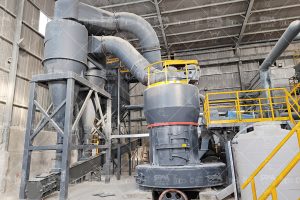
Introduction: The Critical Role of Talc in Polymer Blends The polymer industry continuously seeks innovative solutions to enhance material properties while optimizing production efficiency. Among various mineral fillers, talc has emerged as a crucial component in polymer compounding, offering significant improvements in mechanical strength, thermal stability, and dimensional accuracy. However, the effectiveness of talc as […]
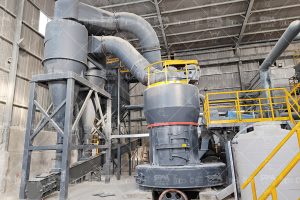
Introduction The global shift toward sustainable materials has positioned bio-based plastics as a critical alternative to conventional petroleum-derived polymers. Among various fillers and reinforcing agents, calcite powder has emerged as a vital component in enhancing the mechanical, thermal, and economic properties of bio-based plastics. However, the efficacy of calcite as a functional filler is heavily […]
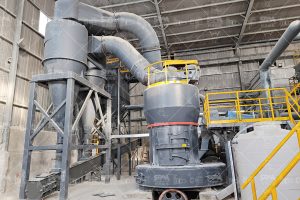
Introduction: The Critical Role of Quartz Processing in Semiconductor Manufacturing The semiconductor industry relies heavily on high-purity quartz materials for various applications, particularly in the production of silicon wafers that form the foundation of modern electronics. Quartz roller mills have emerged as essential equipment in this process, offering unprecedented precision and efficiency in transforming raw […]

Introduction Self-leveling floor compounds (SLCs) have revolutionized modern construction with their ability to create perfectly flat surfaces quickly and efficiently. At the heart of high-quality SLC production lies the proper preparation of gypsum powder, where particle size distribution, purity, and consistency play crucial roles in determining the final product performance. Selecting the appropriate gypsum grinding […]