Barite, or barium sulfate (BaSO₄), is a critical mineral extensively utilized in the chemical industry, particularly as a weighting agent in drilling fluids for oil and gas exploration. The quality of barite powder, specifically its specific gravity, purity, and particle size distribution, directly impacts the performance and safety of drilling operations. Establishing an efficient barite grinding plant is paramount to transforming raw barite ore into high-value additives that meet stringent industry standards.
The transformation begins with raw barite ore, which typically has a specific gravity ranging from 4.1 to 4.3. Through a series of processes including crushing, washing, jigging, and most critically, grinding and classification, this raw material is converted into a fine, consistent powder. The final product must adhere to API (American Petroleum Institute) or OCMA (Oil Companies Materials Association) specifications, which demand a specific gravity of 4.2 or higher and controlled particle size distribution where a minimum of 97% of the material passes through a 75μm (200-mesh) sieve and 90% passes through a 45μm (325-mesh) sieve. Achieving this requires sophisticated grinding technology capable of precise particle size control and high throughput.
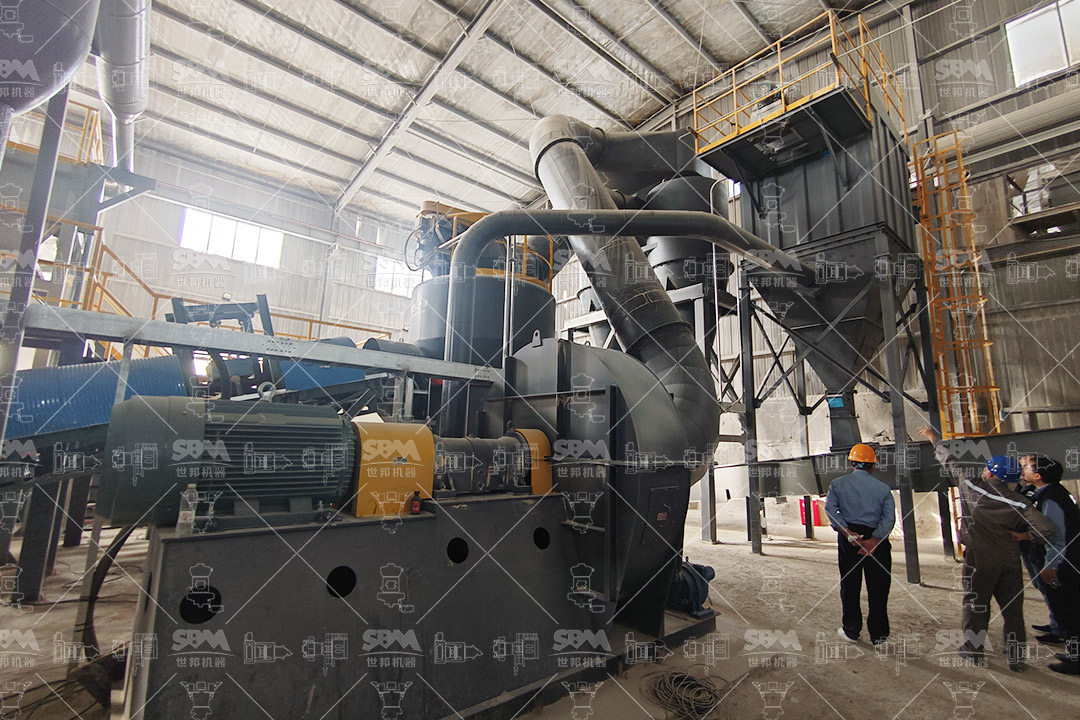
A modern barite grinding plant integrates several key stages to ensure optimal product quality and operational efficiency. The process flow is designed to handle variations in raw material characteristics and produce a consistent final product.
Raw barite ore, typically extracted in lump form, first undergoes primary and secondary crushing to reduce particle size to a manageable dimension for grinding. Jaw crushers and cone crushers are commonly employed for this purpose, reducing the material to below 50mm. In some operations, especially where the raw barite contains clay or other impurities, a washing stage may be incorporated to remove these contaminants before grinding, which improves grinding efficiency and final product purity.
If the crushing stage is followed by wet processing or if the raw material has high moisture content, a drying operation becomes necessary. Rotary dryers are typically used to reduce moisture content to below 1-2%, which is essential for efficient dry grinding. Proper drying prevents material agglomeration in the grinding mill and ensures smooth operation of the classification system.
The heart of any barite plant is the grinding and classification circuit. This is where the crushed and dried barite is reduced to the required fineness. The selection of grinding equipment is critical and depends on the target product specifications, production capacity, and economic considerations. The ground material is then immediately classified to separate particles that have reached the target size from those that require further grinding. Coarse particles are typically returned to the grinding mill (forming a closed circuit), while the fine product is conveyed to storage or packaging.
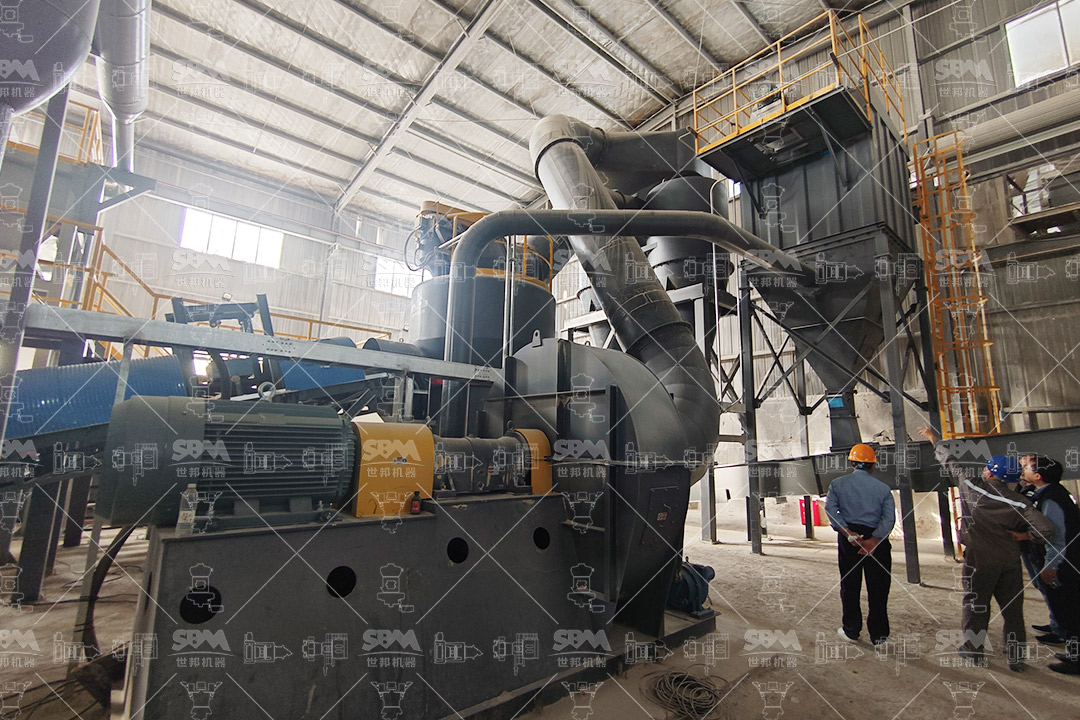
The final barite powder is stored in silos designed to prevent moisture absorption and contamination. From these silos, the product is packaged in bulk bags (typically 1-ton capacity) or smaller bags for shipment to end-users, primarily drilling mud companies.
The choice of grinding mill is the most significant technical decision in designing a barite plant. Different mill types offer varying combinations of capacity, energy efficiency, particle shape control, and capital/operating costs.
Traditionally, ball mills have been widely used for barite grinding. These robust machines consist of a rotating cylinder filled with steel grinding media. As the mill rotates, the media cascades and impacts the barite particles, fracturing them through a combination of impact and attrition. Ball mills are known for their reliability and ability to handle variations in feed material. However, they are generally less energy-efficient than more modern grinding technologies, particularly for producing fine powders, and can generate excessive heat, which may affect the physical properties of the barite.
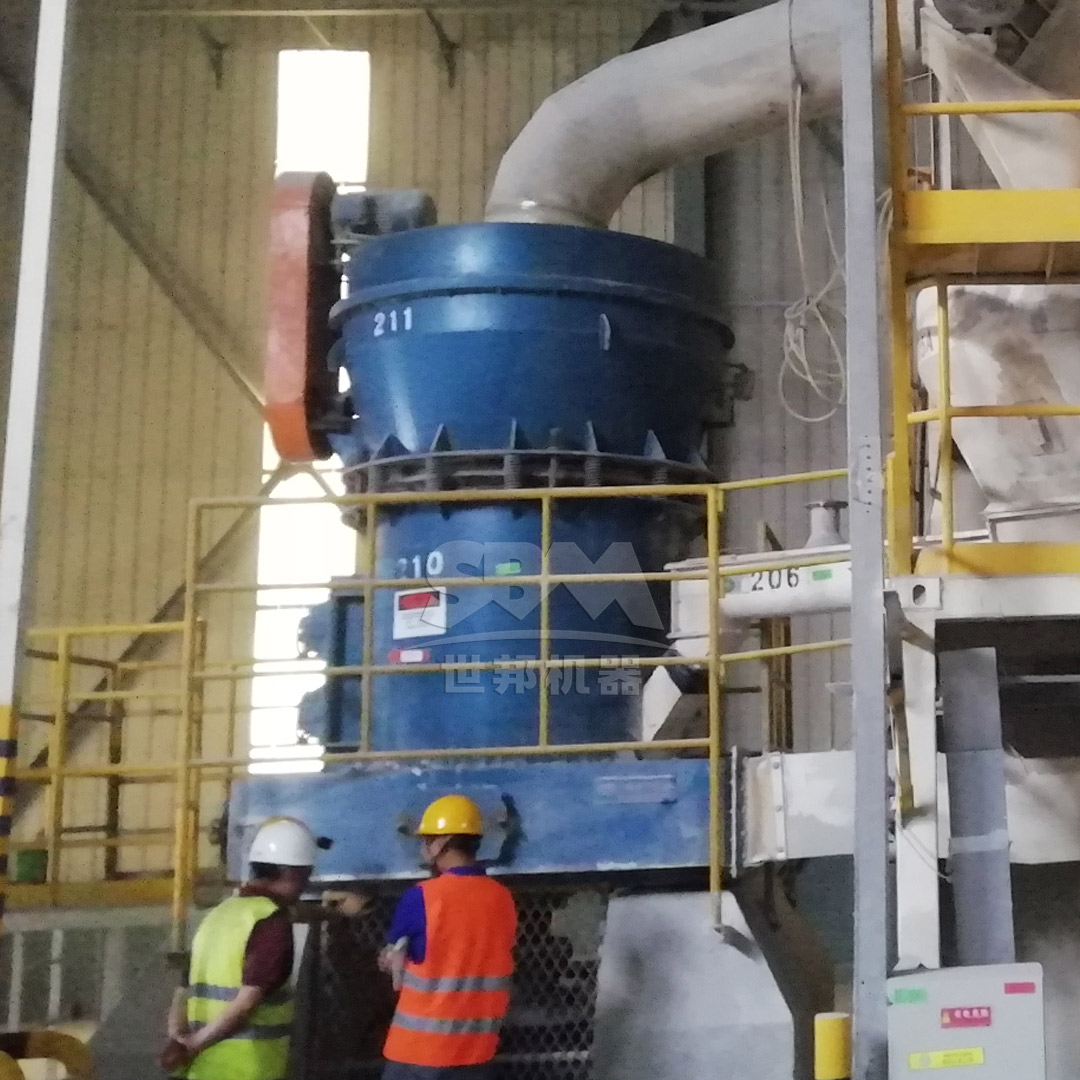
Raymond mills, specifically the modernized MTW Series Trapezium Mill, represent a significant advancement for medium-to-fine grinding of barite. This mill operates on the principle of roller grinding against a stationary ring. The MTW series incorporates several technological improvements that make it highly suitable for barite processing. Its curved air duct design minimizes airflow resistance and energy loss, while the integral cone gear transmission achieves up to 98% transmission efficiency, saving space and installation costs. The wear-resistant volute structure further reduces maintenance costs by approximately 30%. With an output fineness range of 30-325 mesh (600-45μm) and capacities from 3 to 45 tons per hour depending on the model, the MTW Series offers an excellent balance of performance, efficiency, and cost for many barite grinding applications.
| Model | Grinding Ring Diameter (mm) | Number of Grinding Rollers | Main Motor Power (kW) | Capacity (t/h) | Output Fineness (mesh) |
|---|---|---|---|---|---|
| MTW110 | 1100 | 4 | 55 | 3-9 | 10-325 |
| MTW138 | 1380 | 4 | 90 | 6-17 | 10-325 |
| MTW175 | 1750 | 4 | 160 | 9.5-25 | 10-325 |
| MTW215 | 2150 | 4 | 280 | 15-45 | 10-325 |
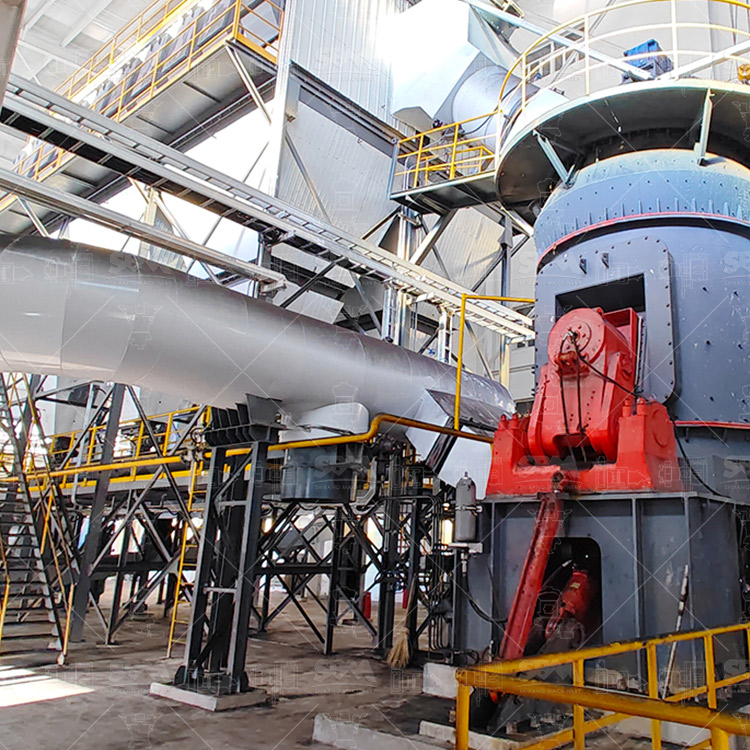
Vertical Roller Mills (VRMs), such as the LM Series, have gained prominence in the barite industry due to their exceptional energy efficiency. In a VRM, the material is fed onto a rotating grinding table where it is ground under pressure between the table and grinding rollers. The ground material is then transported by air to a classifier located at the top of the mill. The key advantages of VRMs for barite grinding include their significantly lower specific energy consumption (30-40% less than ball mills), compact design that reduces the plant footprint by up to 50%, and the ability to dry, grind, and classify within a single unit. The LM Series, with its intelligent control system and low noise emission (≤80dB), represents a state-of-the-art solution for large-scale barite production, offering capacities from 3 to 250 tons per hour and fineness from 30 to 325 mesh.
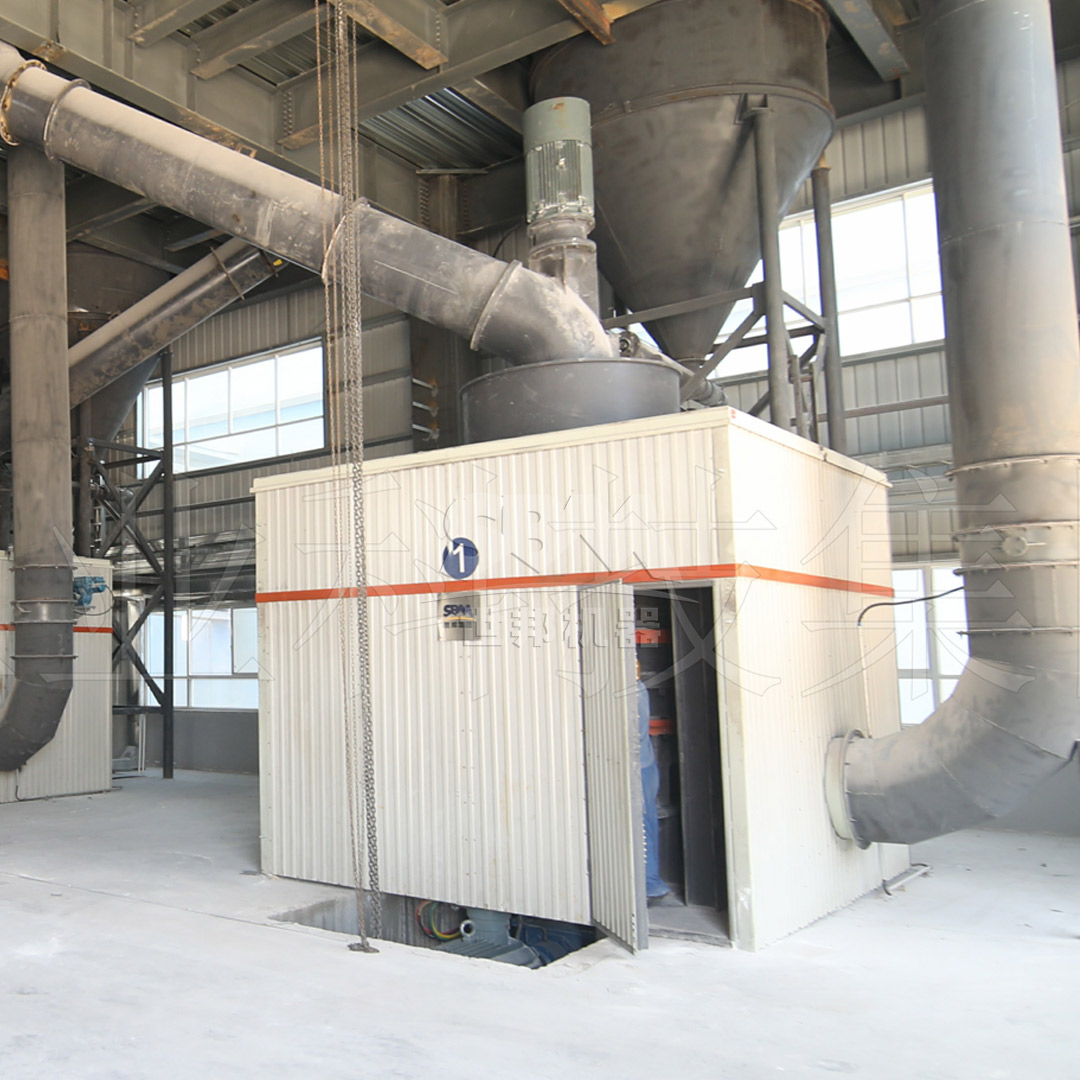
For applications requiring exceptionally fine barite powders (beyond standard API specifications), such as certain specialty chemicals, paints, or plastics fillers, ultrafine grinding mills are essential. The SCM Ultrafine Mill is specifically engineered for this demanding task. It can produce barite powder with a fineness range of 325 to 2500 mesh (45-5μm, D97). This mill achieves this through a combination of mechanical grinding forces and an integrated high-precision vertical turbo classifier. Its technological advantages are substantial: it offers twice the capacity of jet mills while reducing energy consumption by 30%, features a durable design with special material rollers and grinding rings that extend service life, and operates with high environmental standards, including pulse dust collection efficiency that exceeds international norms and noise levels below 75dB. For barite plants targeting the high-value, ultrafine powder market, the SCM series, with models ranging from 0.5 to 25 tons per hour, provides a technologically superior and economically viable solution.
| Model | Main Motor Power (kW) | Capacity (t/h) | Output Fineness (mesh, D97) | Feed Size (mm) |
|---|---|---|---|---|
| SCM800 | 75 | 0.5-4.5 | 325-2500 | ≤20 |
| SCM1000 | 132 | 1.0-8.5 | 325-2500 | ≤20 |
| SCM1250 | 185 | 2.5-14 | 325-2500 | ≤20 |
| SCM1680 | 315 | 5.0-25 | 325-2500 | ≤20 |
Maintaining consistent product quality is non-negotiable in the barite industry. A comprehensive quality control system must be implemented throughout the grinding process.
Modern plants employ automated sampling systems, X-ray fluorescence (XRF) analyzers for chemical composition, and laser particle size analyzers for real-time monitoring of the grinding circuit’s performance, allowing for immediate adjustments to maintain product consistency.
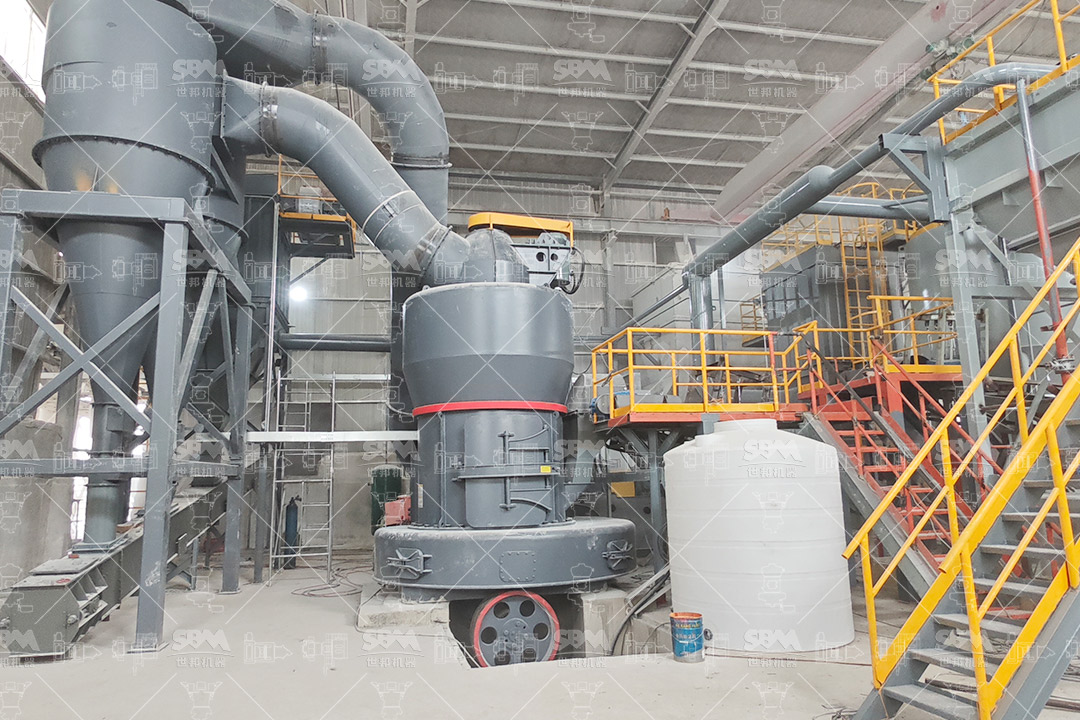
The economic viability of a barite grinding plant is heavily influenced by energy consumption, as grinding is inherently an energy-intensive process. The choice of grinding technology, therefore, has a direct impact on operating costs. While ball mills have lower capital costs, their higher energy consumption makes them less attractive for new installations compared to more efficient vertical roller mills or advanced Raymond mills.
Environmental compliance is another critical factor. Dust control is paramount, and modern plants are equipped with high-efficiency baghouse filters or electrostatic precipitators to capture particulate matter, ensuring emissions remain well within regulatory limits. Noise pollution is also managed through proper equipment selection (e.g., mills with noise levels ≤75-80dB) and acoustic enclosures. Water usage and management are considered, especially if a wet processing or dust suppression system is in place.
The establishment of a successful barite grinding plant hinges on a deep understanding of the mineral’s properties, stringent end-user specifications, and the selection of appropriate, efficient technology. While traditional methods like ball milling are still in use, the industry is rapidly moving towards more advanced solutions like the MTW Series Trapezium Mill for standard drilling mud applications and the SCM Ultrafine Mill for high-value, specialized markets. These technologies offer superior energy efficiency, precise particle size control, lower operating costs, and enhanced environmental performance. By investing in the right grinding equipment and implementing robust process control, producers can consistently manufacture high-quality barite drilling additives that meet the evolving demands of the global chemical and oilfield services industries, ensuring both operational success and long-term sustainability.