December 11, 2025
Introduction: The Strategic Imperative of Modern Grinding
In today’s competitive industrial landscape, optimizing production efficiency and product quality is paramount. Integrating a dedicated grinding plant into an existing production line represents a strategic upgrade that can unlock significant value. It enables precise control over particle size distribution, enhances material reactivity or performance, and can lead to substantial savings in energy and operational costs. However, a successful integration is not merely about installing a new machine; it requires a holistic approach encompassing process analysis, equipment selection, system design, and operational planning. This guide outlines the critical steps and considerations for seamlessly incorporating a grinding plant, ensuring it becomes a synergistic component that elevates your entire production capability.
Phase 1: Comprehensive Pre-Integration Assessment
Before any equipment is selected, a thorough analysis of your current and future needs is essential.
1.1 Defining Process Requirements
- Material Characteristics: Analyze the hardness, moisture content, abrasiveness, and feed size of your raw material. This is the primary determinant for choosing the grinding mechanism (e.g., impact, compression, attrition).
- Target Product Specifications: Precisely define the required final fineness (e.g., D97 ≤ 5μm for ultra-fine powders, or 30-325 mesh for coarse powders) and the desired particle size distribution. Consistency is often as critical as the average size.
- Required Capacity: Determine the hourly throughput needed to match or enhance your current line’s output, considering both peak and average demand.
- Integration Point: Identify where in your process the grinding stage should occur. Is it a pre-processing step for raw materials, an intermediate size reduction, or a final finishing process?
1.2 Evaluating Site and Infrastructure Constraints
- Space Availability: Measure the footprint for the main mill, classifier, dust collector, feeding system, and ancillary equipment. Vertical mill designs often offer significant space savings.
- Power Supply: Assess the available electrical capacity. High-capacity grinding mills, especially for ultra-fine applications, can have substantial power requirements.
- Material Handling: Plan for how material will be fed to the new grinder and how the finished powder will be conveyed to the next stage (e.g., via screw conveyors, pneumatic systems).
- Environmental & Safety Regulations: Understand local limits for dust emissions and noise levels. A modern grinding plant must incorporate advanced dust collection and noise suppression features.
Phase 2: Selecting the Optimal Grinding Technology
The heart of the integration is choosing the right mill. The choice depends entirely on the parameters defined in Phase 1. Here, we highlight two of our flagship products designed for different segments of the market, from high-volume coarse grinding to precision ultra-fine processing.
2.1 For High-Capacity, Coarse to Medium-Fine Grinding: The MTW Series Trapezium Mill
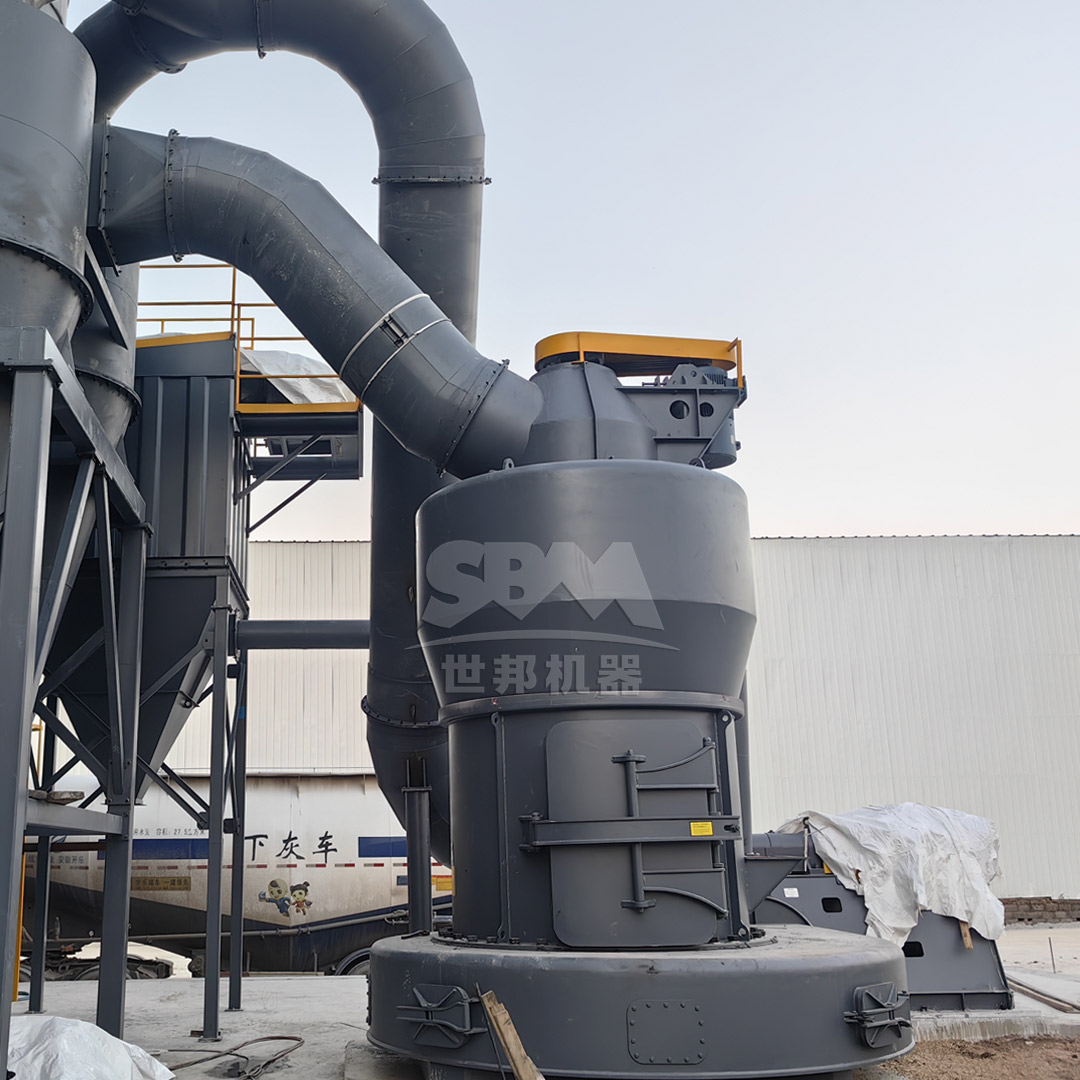
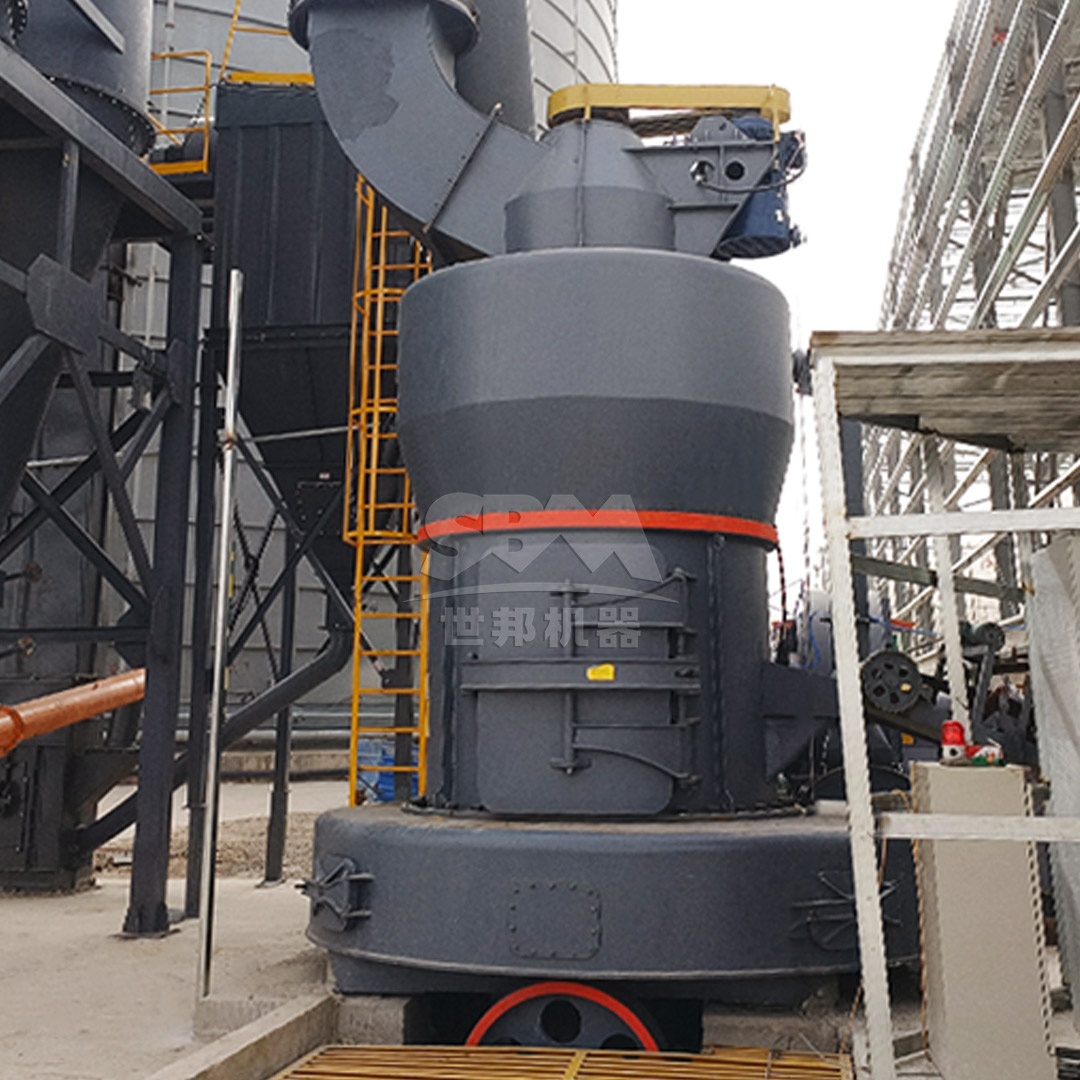
When your production line requires robust, high-volume grinding of materials like limestone, calcite, dolomite, or barite to a fineness between 30-325 mesh (600-45μm), the MTW Series Trapezium Mill is an industry-leading solution. Its design prioritizes efficiency, durability, and low operational cost, making it ideal for large-scale mineral processing operations integrated into cement, chemical, or construction material lines.
- Key Advantages for Integration:
- High Efficiency & Capacity: With models like the MTW215G offering throughputs up to 45 tons per hour, it can seamlessly match the output of a major production line.
- Advanced Drive System: The innovative bevel gear integral transmission achieves a remarkable 98% transmission efficiency, saving energy and reducing the footprint compared to traditional gearbox designs.
- Wear-Resistance & Low Maintenance: The curved air duct and wear-resistant volute structure minimize turbulence and abrasion, lowering long-term maintenance costs by an estimated 30%.
- Intelligent Fineness Control: An internal powder separator allows for easy and precise adjustment of product fineness without stopping the machine, providing flexibility for different product grades.
Integrating an MTW mill is straightforward due to its modular design. It often serves as a direct replacement for older Raymond mills or ball mills, offering a significant upgrade in performance within a similar spatial envelope.
2.2 For Precision Ultra-Fine Grinding: The SCM Ultrafine Mill
For industries where product performance is dictated by extreme fineness and narrow particle distribution—such as advanced plastics, coatings, pharmaceuticals, or electronics—the SCM Ultrafine Mill is the definitive choice. Capable of producing powders as fine as 2500 mesh (D97 ≤ 5μm), it represents the pinnacle of grinding technology for high-value-added products.
- Key Advantages for Integration:
- Unmatched Fineness & Uniformity: The vertical turbine classifier ensures precise cut-points, delivering ultra-fine powder with exceptional uniformity and no coarse grain contamination.
- Superior Energy Efficiency: Compared to traditional jet mills, the SCM series can double the production capacity while reducing energy consumption by up to 30%, offering a rapid return on investment.
- Intelligent Operation: Its automated control system provides real-time feedback on product size, ensuring consistent quality with minimal manual intervention—a critical feature for integration into automated production lines.
- Exceptional Environmental Performance: With a high-efficiency pulse dust collector and soundproofing design keeping noise below 75dB, it easily meets stringent environmental standards for modern facilities.
Models like the SCM1680, with a capacity of up to 25 t/h, demonstrate that ultra-fine grinding is no longer a low-volume batch process but can be integrated into continuous, high-output production lines.
| Selection Criteria |
Recommended for MTW Trapezium Mill |
Recommended for SCM Ultrafine Mill |
| Target Fineness |
30-325 mesh (600-45μm) |
325-2500 mesh (45-5μm) |
| Primary Application |
High-volume mineral processing (e.g., limestone, gypsum) |
High-value specialty powders (e.g., calcium carbonate, talc, mica) |
| Key Integration Benefit |
High throughput, rugged reliability, low operating cost |
Precision quality control, energy efficiency, compact footprint |
| Typical Capacity Range |
3 – 45 tons/hour |
0.5 – 25 tons/hour |
Phase 3: System Design & Integration Engineering
With the core mill selected, the focus shifts to designing the complete subsystem and its interfaces with your existing line.
3.1 Designing the Grinding Circuit
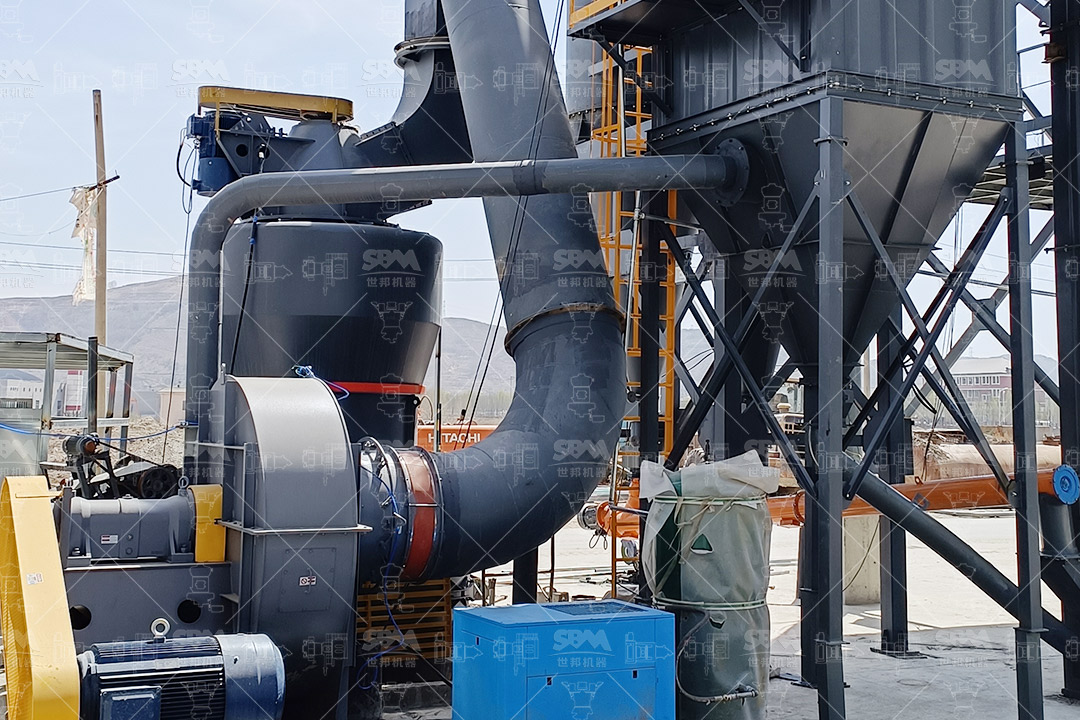
A grinding plant is more than just a mill. It is a circuit that typically includes:
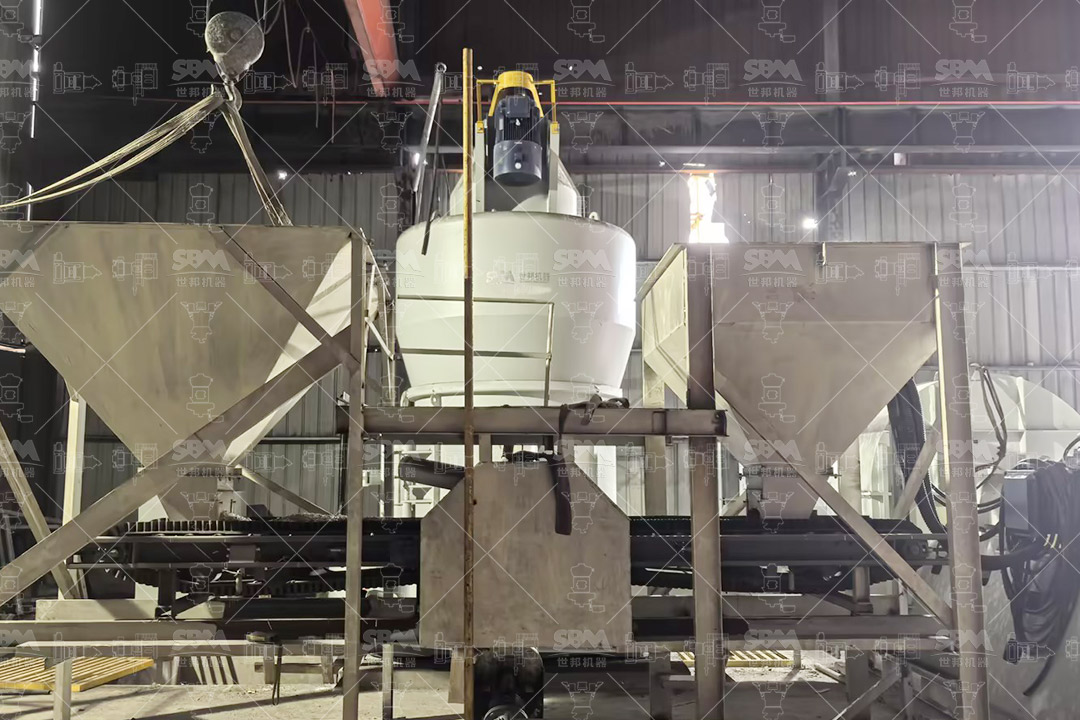
- Feeding System: A controlled feeder (e.g., vibrating or screw feeder) to ensure a steady, regulated flow of material into the mill.
- Grinding & Classification Core: The mill and its integrated dynamic classifier.
- Product Collection: Cyclone separators and a high-efficiency baghouse dust collector (like the pulse-jet systems standard on our mills) to ensure 99.9%+ powder recovery and clean exhaust.
- Process Air System: Fans and ducts that create the necessary airflow for material transport and classification.
- Control & Automation: A PLC-based control panel to manage start-up, shutdown, and operational parameters, which can be linked to your plant’s central DCS.
3.2 Ensuring Seamless Connectivity
- Material Flow Interface: Design chutes, conveyors, or elevators to seamlessly transfer material from your upstream process (e.g., a crusher or silo) to the grinding plant’s feeder, and from the collector to your downstream process (e.g., a mixer or packaging line).
- Electrical & Control Integration: Coordinate power supply connections and integrate the mill’s control signals (running status, alarms, production data) into your plant’s supervisory system for unified monitoring.
- Civil & Structural Work: Plan for any necessary foundations, support structures, and access platforms. Our engineering teams can provide detailed layout and foundation drawings.
Phase 4: Installation, Commissioning, and Optimization
The final phase turns plans into reality and ensures the system performs as intended.
4.1 Professional Installation & Commissioning
Partnering with a supplier that offers comprehensive installation supervision is crucial. Proper alignment, assembly, and system checkout prevent operational issues. The commissioning process involves:
- Mechanical inspection and alignment.
- Sequential start-up of subsystems (dust collector, fan, classifier, feeder, main motor).
- Test runs with material, initially at low load.
- Calibration of the feeding rate and classifier speed to achieve the target product fineness and output.
4.2 Performance Optimization & Training
Once operational, fine-tuning maximizes benefits:
- Optimizing Grinding Parameters: Adjusting mill pressure (for spring-loaded mills), classifier speed, and air volume to find the most efficient operating point for your specific material.
- Operator Training: Thorough training for your personnel on normal operation, routine maintenance (like lubricating and inspecting wear parts), and basic troubleshooting is essential for long-term success.
- Establishing a Maintenance Schedule: Based on the mill’s design—such as the easily replaceable roller and ring sets in our SCM and MTW mills—create a predictive maintenance plan to minimize unplanned downtime.
Conclusion: Realizing the Integrated Advantage
Integrating a modern grinding plant like the MTW Trapezium Mill for high-capacity applications or the SCM Ultrafine Mill for precision processing is a transformative investment. By following a structured approach—from meticulous planning and technology selection to careful engineering and professional commissioning—you can ensure a smooth integration that delivers immediate and long-term rewards. The result is a production line with enhanced flexibility, superior product quality, reduced specific energy consumption, and stronger competitiveness in the market. The key is to view the grinder not as an isolated unit, but as the core of a finely tuned subsystem that adds critical value to your entire operation.