Petroleum coke (petcoke) has emerged as a crucial fuel source for industrial heating applications due to its high calorific value and cost-effectiveness compared to traditional fuels. As a carbonaceous solid derived from oil refinery coker units or other cracking processes, petcoke requires specialized grinding equipment to transform it into fine powder suitable for combustion in various industrial heating systems. The grinding process significantly enhances the combustion efficiency and reduces emissions, making it an environmentally and economically viable option for cement kilns, power plants, and other thermal applications.
The selection of appropriate grinding technology depends on multiple factors including feed size, required product fineness, capacity requirements, and specific application needs. Modern petcoke grinding systems must address challenges such as the material’s abrasiveness, potential for spontaneous combustion, and the need for precise particle size control to optimize combustion characteristics.

Petroleum coke presents unique challenges in grinding operations due to its high hardness (typically 3-4 Mohs), variable moisture content, and potential for containing volatile components. Proper material preparation begins with crushing to reduce raw petcoke to manageable sizes before fine grinding. The initial crushing stage typically reduces material from as large as 100mm down to 20-30mm, preparing it for the subsequent grinding process.
Moisture control is critical in petcoke grinding, as excessive moisture can lead to clogging, reduced throughput, and increased energy consumption. Many modern grinding systems incorporate pre-drying capabilities or recommend separate drying operations when processing high-moisture petcoke. The abrasive nature of petcoke also demands grinding equipment with superior wear resistance to maintain consistent performance and reduce maintenance frequency.
The optimal particle size distribution for petcoke in industrial heating applications typically ranges from 30 mesh to 325 mesh (45-500μm), with specific requirements varying based on the combustion system design. Finer particles generally result in more complete combustion and reduced unburned carbon, but require more grinding energy. The D97 parameter (particle size at which 97% of the material is finer) is commonly specified to ensure consistent combustion performance.
For pulverized fuel applications in cement kilns and power plants, the target fineness is often 80-90% passing 200 mesh (74μm). More advanced combustion systems may require even finer particles in the range of 325-2500 mesh (5-45μm) to achieve optimal burn-out rates and minimize particulate emissions. The selection of grinding equipment must therefore align with these specific fineness requirements while considering the trade-offs between energy consumption and combustion efficiency.
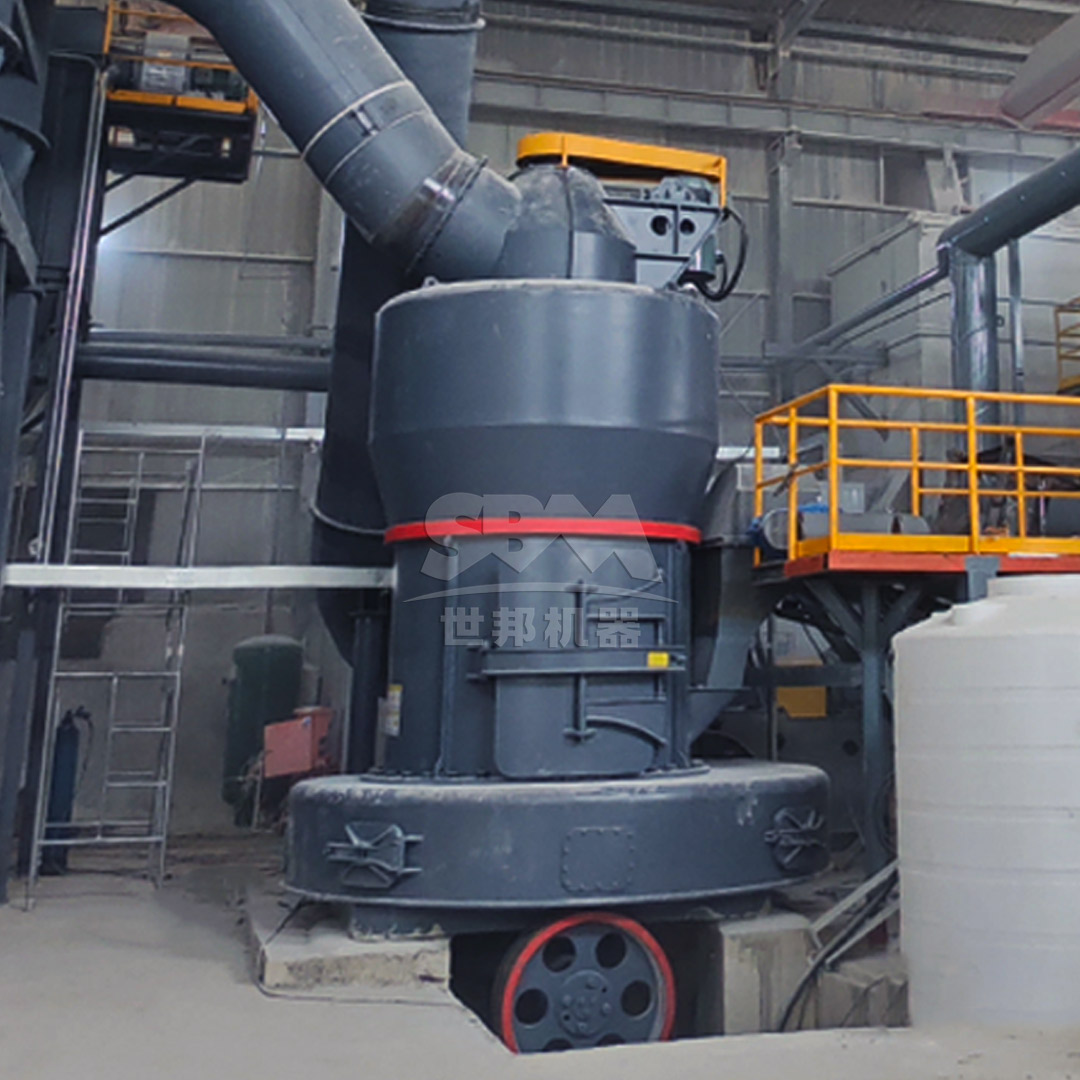
Vertical roller mills (VRMs) have become the preferred solution for large-scale petcoke grinding operations due to their high efficiency, reliability, and ability to handle moist materials. The fundamental working principle involves material being fed centrally onto a rotating grinding table where it is ground between the table and rollers. Ground material is transported by air to a classifier where oversize particles are separated and returned to the grinding table.
For petroleum coke processing, we particularly recommend our LM Series Vertical Roller Mill, which offers several distinct advantages:
The LM Series handles feed sizes up to 50mm and produces fineness from 30-325 mesh (special models up to 600 mesh) with capacities ranging from 3-250 tons per hour depending on specific model selection. For typical petcoke grinding applications, models such as the LM190K (23-68 t/h capacity) and LM220K (36-105 t/h capacity) provide optimal balance between performance and energy efficiency.

For applications requiring extremely fine petroleum coke powders, particularly in advanced combustion systems or as additives in specialized industrial processes, ultrafine grinding technologies offer the necessary precision and control. These systems can produce particles in the range of 325-2500 mesh (5-45μm) with narrow size distributions essential for optimal combustion characteristics.
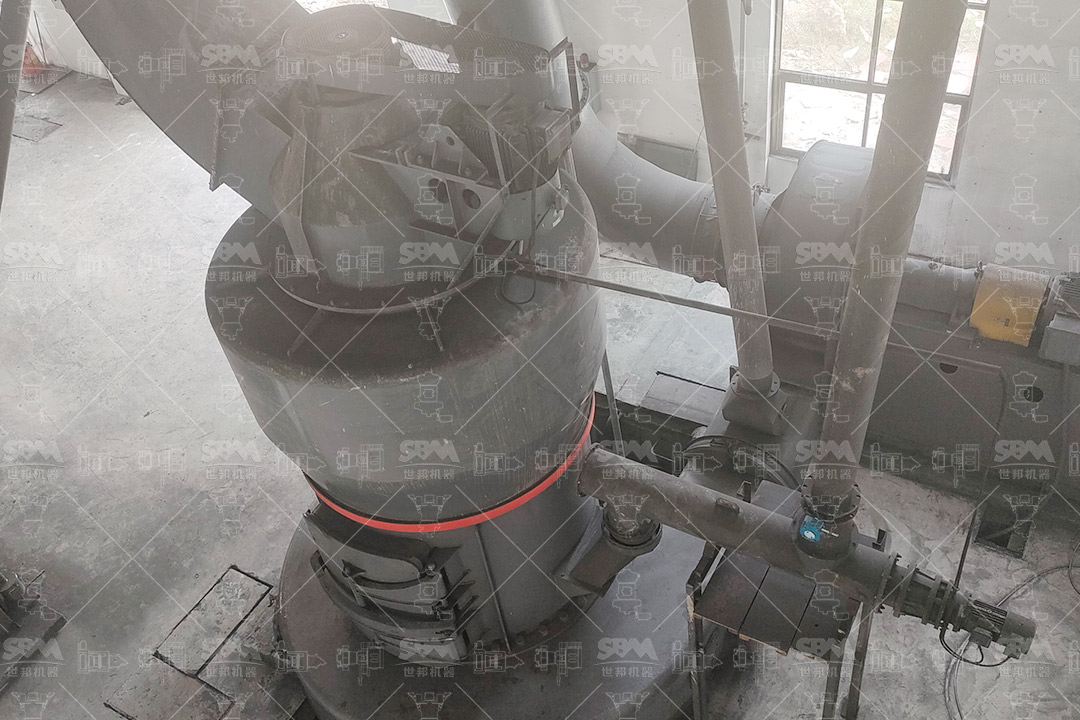
Our SCM Ultrafine Mill represents the cutting edge in petroleum coke ultrafine grinding technology, delivering exceptional performance through several key features:
The SCM Series processes feed material up to 20mm and delivers output fineness from 325-2500 mesh (D97≤5μm) with capacities ranging from 0.5-25 tons per hour across different models. For petcoke applications, the SCM1250 (2.5-14 t/h capacity) and SCM1680 (5.0-25 t/h capacity) models provide the ideal combination of high throughput and precise particle size control.
| Model | Feed Size (mm) | Output Fineness | Capacity (t/h) | Main Motor Power | Recommended Application |
|---|---|---|---|---|---|
| SCM800 | ≤20 | 325-2500 mesh | 0.5-4.5 | 75 kW | Pilot plants, small operations |
| SCM1000 | ≤20 | 325-2500 mesh | 1.0-8.5 | 132 kW | Medium-scale production |
| SCM1250 | ≤20 | 325-2500 mesh | 2.5-14 | 185 kW | Standard industrial applications |
| SCM1680 | ≤20 | 325-2500 mesh | 5.0-25 | 315 kW | Large-scale production facilities |
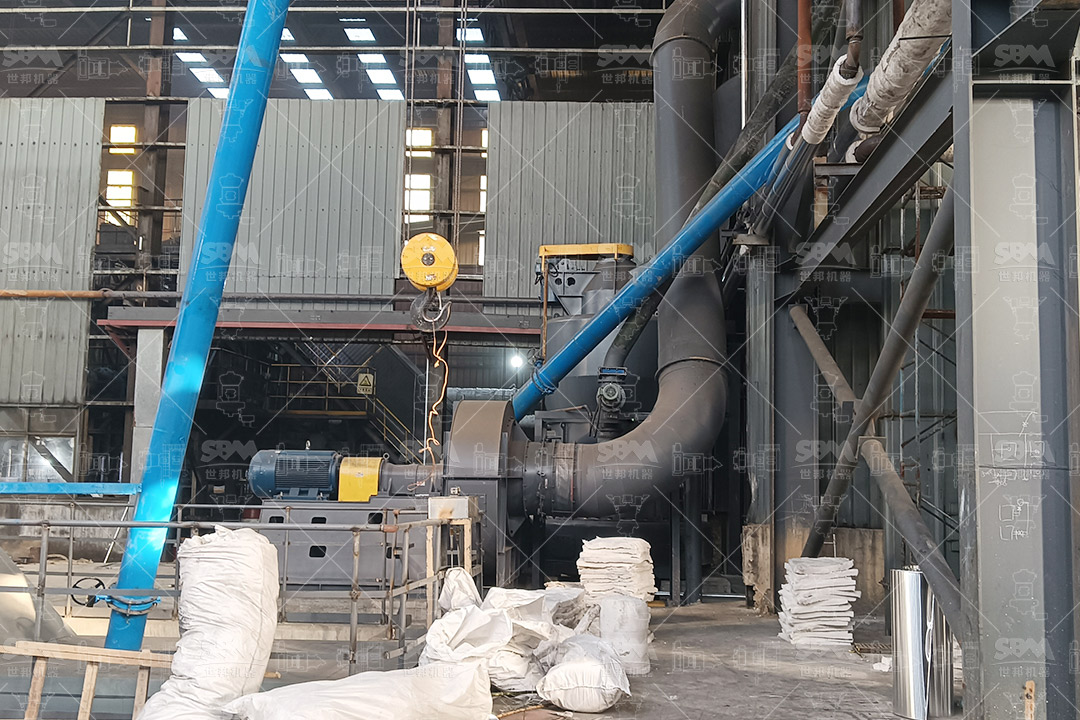
A complete petroleum coke grinding plant comprises multiple integrated subsystems working in harmony to deliver consistent, high-quality product. The core grinding mill is supported by auxiliary equipment including feeding systems, drying units (when required), classification systems, dust collection, and product handling. Proper integration of these components is essential for achieving optimal performance, energy efficiency, and operational reliability.
The feeding system must provide consistent, controlled material flow to the grinding mill, typically employing vibrating feeders or belt feeders with weighing systems for accurate control. Pre-crushing equipment such as jaw crushers or hammer mills may be included to ensure uniform feed size to the grinding circuit. For materials with elevated moisture content, flash dryers or similar drying systems can be integrated either before or within the grinding circuit.
Effective dust control is paramount in petroleum coke grinding operations due to both environmental regulations and the combustible nature of fine petcoke particles. Modern plants employ comprehensive dust collection systems typically incorporating pulse-jet baghouse filters with explosion venting capabilities. These systems must be designed to handle the specific characteristics of petcoke dust, including its tendency to self-ignite under certain conditions.
Advanced dust collection systems for petcoke grinding achieve collection efficiencies exceeding 99.9%, with emissions consistently below 20mg/Nm³. The design incorporates safety features such as spark detection and suppression, explosion venting, and isolation valves to mitigate fire and explosion risks. Proper system design also includes consideration of material handling after collection, with screw conveyors and storage silos designed to prevent dust generation during transfer operations.

Maximizing the performance of petroleum coke grinding systems requires attention to several operational parameters. Mill differential pressure, grinding force, classifier speed, and system temperature must be carefully balanced to achieve target product quality while minimizing energy consumption. Modern control systems utilize advanced algorithms to optimize these parameters automatically, but operator understanding remains crucial for troubleshooting and fine-tuning.
For vertical roller mills processing petcoke, optimal operation typically involves maintaining stable bed depth on the grinding table, appropriate grinding pressure, and controlled gas flow through the mill. The classifier speed should be adjusted to achieve the target product fineness without excessive recirculation of material. Regular monitoring of motor currents, vibration levels, and bearing temperatures provides early indication of potential issues before they impact production.
Given the abrasive nature of petroleum coke, wear part management represents a significant aspect of grinding system maintenance. Strategic maintenance planning should include regular inspection of grinding elements, classifier components, and fan impellers with replacement based on measured wear rather than fixed time intervals. Many modern mills incorporate wear monitoring systems that track roller and table wear patterns to optimize replacement scheduling.
Preventive maintenance programs for petcoke grinding systems should emphasize:
Implementation of condition monitoring technologies such as vibration analysis, thermal imaging, and lubricant analysis can significantly extend equipment life and prevent unplanned downtime. Many modern grinding systems include integrated monitoring capabilities that provide real-time data on equipment health and performance trends.
The economic evaluation of petroleum coke grinding systems must consider both capital investment and ongoing operating expenses. While vertical roller mills typically involve higher initial investment compared to traditional ball mills, their superior energy efficiency and lower maintenance requirements often result in significantly lower lifetime costs. A comprehensive economic analysis should include equipment purchase, installation, energy consumption, wear part replacement, maintenance labor, and potential production losses during maintenance events.
For a typical medium-scale petcoke grinding operation processing 15 tons per hour to 200 mesh fineness, the SCM Series Ultrafine Mill offers compelling economics with energy consumption approximately 30% lower than alternative technologies. The reduced wear rate of specialized grinding elements further enhances the economic advantage, with component life typically 2-3 times longer than conventional materials. When evaluating different technology options, it’s essential to consider the total cost of ownership over the expected equipment life rather than focusing solely on initial purchase price.
The return on investment for petroleum coke grinding equipment is primarily driven by the value created through improved combustion efficiency, reduced fuel costs compared to alternative fuels, and potential revenue from selling excess grinding capacity. Additional economic benefits include reduced maintenance costs, lower environmental compliance expenses, and improved operational reliability.
A typical ROI calculation for our recommended grinding systems considers:
Most modern petroleum coke grinding installations achieve payback periods of 18-36 months, with the specific timeframe dependent on local energy costs, material characteristics, and operational requirements. The advanced control systems in our recommended equipment further enhance ROI through optimized performance and reduced operator intervention requirements.
The future of petroleum coke grinding technology is evolving toward greater efficiency, enhanced automation, and improved environmental performance. Emerging trends include the development of hybrid grinding systems that combine multiple grinding principles for optimal efficiency across different particle size ranges. Advanced classifier designs are enabling more precise particle size control with lower energy consumption, while improved wear materials are extending maintenance intervals and reducing operating costs.
Digitalization represents another significant trend, with grinding systems increasingly incorporating Industrial Internet of Things (IIoT) capabilities for remote monitoring, predictive maintenance, and performance optimization. These digital platforms collect and analyze operational data to identify optimization opportunities, predict maintenance needs, and provide actionable insights to operators and management. The integration of artificial intelligence and machine learning algorithms is further enhancing system performance through continuous self-optimization based on operating conditions and material characteristics.
As environmental regulations continue to tighten globally, petroleum coke grinding systems must evolve to meet increasingly stringent emissions standards while maintaining economic viability. Future developments will likely focus on further reducing energy consumption through advanced motor designs, improved system aerodynamics, and waste heat recovery integration. Carbon capture and storage considerations may also influence grinding system design as industries move toward decarbonization.
The use of petroleum coke as a transition fuel emphasizes the importance of maximizing combustion efficiency to minimize environmental impact. Ultra-fine grinding technologies that enable more complete combustion with lower excess air requirements contribute significantly to reducing greenhouse gas emissions per unit of energy produced. As the industry evolves, grinding system manufacturers will continue to develop solutions that balance economic, operational, and environmental considerations to meet the changing needs of industrial energy consumers.