200-Mesh Marble Powder Grinding Mill: Which Equipment is Best?

200-Mesh Marble Powder Grinding Mill: Which Equipment is Best?

Introduction

The production of high-quality marble powder, particularly at the widely used 200-mesh (approximately 75 microns) fineness, is a cornerstone for industries ranging from plastics and paints to construction and paper. Selecting the optimal grinding equipment is critical, as it directly impacts product quality, production efficiency, energy consumption, and overall operational costs. This article provides a comprehensive analysis of the key equipment options for producing 200-mesh marble powder, evaluating their suitability and highlighting the most efficient and cost-effective solutions.
\"Raw

Key Considerations for 200-Mesh Marble Grinding

Before delving into specific machinery, it’s essential to understand the requirements for grinding marble to 200 mesh:

  • Fineness & Particle Distribution: The target is 74-75 microns. The ideal mill should produce a tight particle size distribution with minimal oversize or ultrafine (sub-10μm) content, ensuring consistency.
  • Capacity & Throughput: Production needs can vary from small-scale (1-5 TPH) to large industrial lines (25+ TPH). The equipment must match the required hourly output.
  • <\/strong>Energy Efficiency:<\/strong> Grinding is energy-intensive. Mills with higher grinding efficiency and lower specific energy consumption (kWh/ton) offer significant long-term savings.
  • Wear & Maintenance: Marble, though softer than many minerals, still causes abrasion. Equipment with durable wear parts and accessible maintenance designs reduces downtime.
  • System Footprint & Automation: A compact, integrated system with modern automated controls ensures stable operation, consistent product quality, and lower labor costs.
  • <\/ul>

    Equipment Analysis for 200-Mesh Marble Powder

    Several types of grinding mills can achieve 200-mesh fineness, but their performance and economics differ markedly.

    1. Traditional Ball Mill

    Ball mills are a common choice for mineral grinding. They operate via impact and attrition as steel balls tumble inside a rotating drum.

    • Suitability for 200-Mesh Marble: Capable of reaching 200 mesh but often inefficient for this specific application.
    • Advantages: Simple principle, wide availability, can handle wet or dry grinding.
    • Disadvantages: High energy consumption (low efficiency), significant heat generation, noisy operation, poor particle shape control, and a large physical footprint. Producing a consistent 200-mesh product often requires closed-circuit classification, adding complexity.
    • Verdict: Generally not the most economical or efficient primary choice for dedicated 200-mesh marble powder production due to high operational costs.
    • <\/ul>

      2. Raymond Mill (MTW Series European Trapezium Mill)

      An evolved version of the traditional Raymond mill, the MTW series represents a significant leap in technology for medium-fine grinding.

      • Suitability for 200-Mesh Marble: Excellent. The MTW mill’s output range (30-325 mesh) places 200 mesh squarely in its optimal operating zone.
      • Advantages:
        • High Efficiency & Energy Saving: The integral bevel gear drive boasts up to 98% transmission efficiency, directly saving energy.
        • Durable & Low-Wear: Features like the curved shovel blade and wear-resistant volute structure dramatically extend the life of key components, reducing maintenance frequency and cost.
        • Precise Classification: An advanced internal classifier ensures a sharp cut at the target fineness, producing uniform 200-mesh powder with minimal waste.
        • Stable, Large-Capacity Operation: Models like the MTW175G or MTW215G can deliver high throughput (9.5-45 TPH) consistently, ideal for large-scale marble powder plants.
        • <\/ul><\/li>

        • Disadvantages: For projects requiring ultra-fine powder beyond 325 mesh (e.g., 600-2500 mesh), a different mill type would be needed.
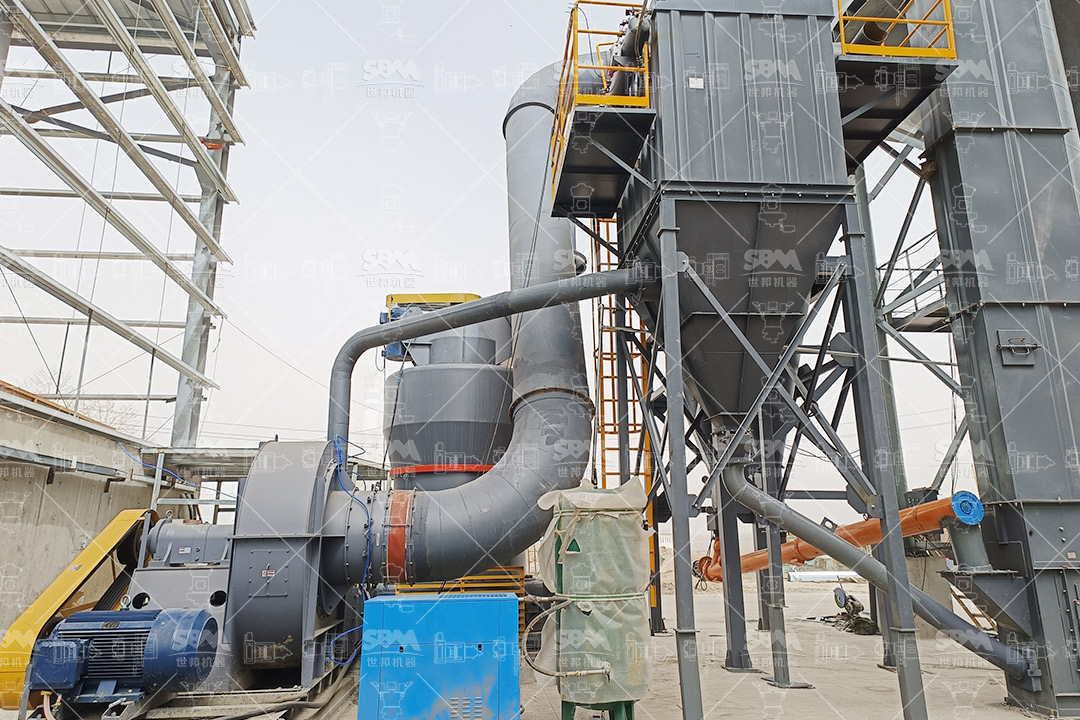
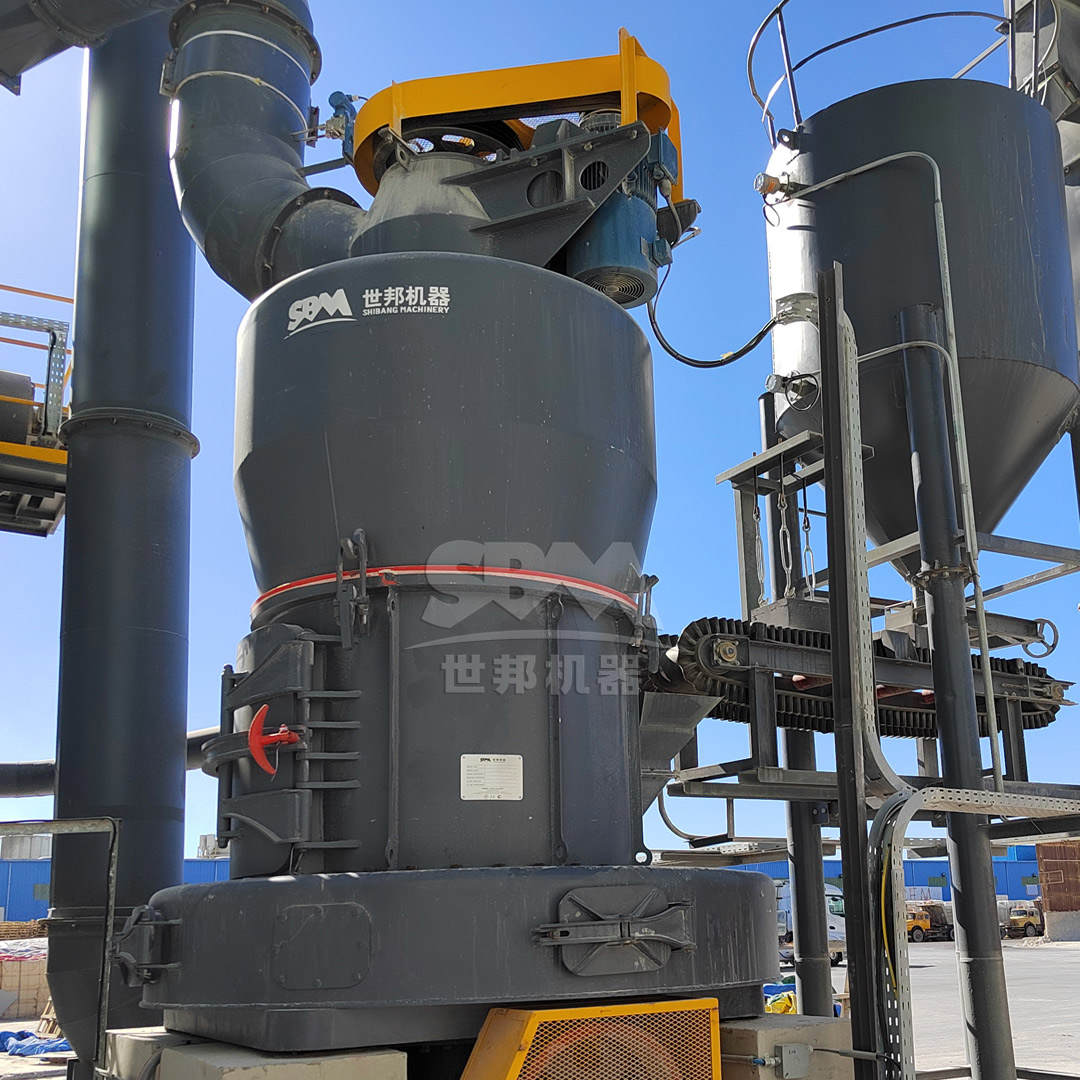
        • Verdict: The MTW Series European Trapezium Mill is arguably one of the best all-around choices for producing 200-mesh marble powder, offering an outstanding balance of efficiency, reliability, product quality, and cost-effectiveness for medium to high-capacity requirements.
        • <\/ul>\"MTW

          3. Vertical Roller Mill (LM Series)

          Vertical Roller Mills (VRMs) are renowned for their integrated grinding-drying-classification process.

          • Suitability for 200-Mesh Marble: Very Good. The standard LM series output (30-325 mesh) perfectly encompasses 200 mesh.
          • Advantages:
            • Exceptional Energy Efficiency: The bed-grinding principle consumes 30-40% less energy than a ball mill system, a major operational saving.
            • Integrated & Compact: The system integrates multiple functions, reducing footprint by ~50% and auxiliary equipment needs.
            • Excellent Drying Capability: Can handle materials with slight moisture effectively.
            • High Automation: Features expert-level control systems for stable, hands-off operation.
            • <\/ul><\/li>

            • Disadvantages: Initial investment can be higher than some traditional systems. For very small-scale projects, it may be less economical.
            • Verdict: An excellent choice for large-scale, modern plants prioritizing low energy consumption, high automation, and a compact layout for 200-mesh marble production.
            • <\/ul>

              4. Ultrafine Mill (SCM Series / LUM Series)

              These mills are engineered for producing powder in the ultrafine range (325-2500 mesh).

              • Suitability for 200-Mesh Marble: Capable, but potentially over-engineered. 200 mesh is at the very coarse end of their capability spectrum.
              • Advantages:
                • Ultra-Precise Classification: Equipped with high-precision turbine classifiers that yield extremely narrow particle distributions.
                • Future-Proofing: If there is potential to produce higher-value ultrafine marble powder (e.g., 800 mesh for high-end plastics) in the future, this mill can do it.
                • High Efficiency for Fine Grinding: When operating in its design range (<45μm), it is more efficient than many alternatives.
                • <\/ul><\/li>

                • Disadvantages: The higher initial cost and potentially more complex operation may not be justified if 200 mesh is the sole and permanent target.
                • Verdict: The ideal choice if your primary goal is ultrafine powder (>325 mesh) or if you require the flexibility to produce a wide range of fineness from 200 to 2500 mesh with top-tier uniformity. For dedicated, high-volume 200-mesh production, an MTW or LM mill might offer better economics.
                • <\/ul>

                  Mill Type<\/th>

                  Optimal Fineness Range<\/th>

                  Energy Efficiency<\/th>

                  Capacity Suitability<\/th>

                  Best For 200-Mesh Marble When…<\/th><\/tr><\/thead>

                  Ball Mill<\/td>

                  0.074-0.8mm<\/td>

                  Low<\/td>

                  Small to Large<\/td>

                  Budget is primary constraint, and efficiency is secondary.<\/td><\/tr>

                  MTW European Mill<\/strong><\/td>

                  30-325 mesh<\/strong><\/td>

                  High<\/strong><\/td>

                  Medium to Large<\/strong><\/td>

                  Seeking the best balance of cost, efficiency, reliability, and product quality.<\/strong><\/td><\/tr>

                  LM Vertical Mill<\/td>

                  30-325 mesh<\/td>

                  Very High<\/td>

                  Large<\/td>

                  Large-scale production with a focus on minimizing energy costs and footprint.<\/td><\/tr>

                  SCM\/LUM Ultrafine Mill<\/td>

                  325-2500 mesh<\/td>

                  High (for fine grinding)<\/td>

                  Small to Medium<\/td>

                  Future plans include ultrafine products, or extreme product uniformity at 200-mesh is critical.<\/td><\/tr><\/tbody><\/table><\/div>

                  Recommended Solution: The Optimal Choice for 200-Mesh

                  Based on a holistic analysis of technical performance, operational economics, and product quality, the MTW Series European Trapezium Mill emerges as the most recommended equipment for most 200-mesh marble powder production scenarios.

                  Here’s why it stands out:

                  • Precision-Targeted Design: Its engineering is optimized for the 30-325 mesh range, meaning it operates at peak efficiency exactly at your target of 200 mesh. You are not paying for excess capability you don’t need, nor are you straining a mill at the limit of its range.
                  • Superior Economic Return: The combination of high transmission efficiency (integral gear drive), reduced wear (patented shovel and volute design), and lower maintenance costs translates to a lower cost per ton over the equipment’s lifetime compared to traditional mills.
                  • Proven Reliability & High Output: With models offering capacities from 3 to 45 TPH, it can scale to meet any production demand while ensuring stable, continuous operation crucial for industrial supply contracts.
                  • Excellent Product Quality: The built-in classifier ensures the marble powder has a consistent and uniform particle size at 200 mesh, which is vital for its performance in downstream applications like PVC filling or coating production.
                  • <\/ul>

                    For projects with a clear, long-term focus solely on 200-mesh and similar medium-fine powders, investing in the MTW Series provides the most robust, efficient, and economical grinding solution.

                    \"Cyclone

                    Conclusion

                    Selecting the best mill for 200-mesh marble powder requires moving beyond mere capability to consider optimized efficiency, lifetime costs, and final product characteristics. While ball mills are a legacy option and ultrafine mills offer advanced flexibility, the MTW Series European Trapezium Mill represents the modern sweet spot for this specific application. Its design philosophy directly addresses the core needs of marble processors: producing a high-volume, consistent 200-mesh product with maximum energy savings and minimum operational hassle. For a future-proof investment that delivers quality and profitability, specifying the MTW series is a strategically sound decision for your marble powder grinding plant.