January 03, 2026
Introduction
Gold ore processing is a critical stage in the mining industry, where efficient and precise grinding determines the recovery rate and overall economic viability of the operation. The transformation of raw gold-bearing rock into fine powder liberates the precious metal for subsequent extraction processes like cyanidation or flotation. Selecting the appropriate grinding mill is paramount, as it directly impacts particle size distribution, energy consumption, operational costs, and environmental footprint. This guide provides a comprehensive overview of the primary types of grinding equipment used for gold ore and offers a structured framework for selection, incorporating key technical parameters and operational considerations.
Key Factors in Mill Selection for Gold Ore
Before delving into specific mill types, understanding the core selection criteria is essential. These factors are interdependent and must be evaluated against your specific ore characteristics and project goals.
Ore Characteristics
- Hardness & Abrasiveness: Measured by Bond Work Index or other standard tests. Hard, abrasive ores require robust mills with high-wear-resistant materials.
- Feed Size: The maximum particle size the mill can accept, often determined by upstream crushing stages.
- Moisture Content: Influences the choice between dry and wet grinding systems. High moisture may lead to clogging in dry mills.
- Gold Liberation Size: The target fineness required to effectively liberate gold particles from the gangue mineral. This is the single most important parameter for determining product fineness.
Process Requirements
- Required Product Fineness: Typically expressed in microns or mesh size (e.g., 75μm, 200 mesh, or ultra-fine below 10μm).
- Production Capacity (TPH): The required throughput of the grinding circuit.
- Grinding Circuit (Open vs. Closed): Closed-circuit grinding with a classifier (e.g., hydrocyclone, air classifier) improves efficiency and controls over-grinding.
- Wet vs. Dry Grinding: Wet grinding is common in gold processing for dust suppression and material handling, but dry grinding has applications where water is scarce or for specific downstream processes.
Economic & Operational Considerations
- Capital Expenditure (CAPEX): Initial investment for the mill and auxiliary equipment.
- Operating Expenditure (OPEX): Includes energy consumption (kWh/ton), grinding media/liner wear, and maintenance labor.
- Footprint & Installation: Space constraints at the plant site.
- Environmental Compliance: Noise levels and dust emission control requirements.
Types of Grinding Mills for Gold Ore
The following section details the most common and effective grinding mill technologies applied in gold ore processing, from coarse grinding to ultra-fine pulverization.
1. Ball Mill
The workhorse of mineral processing, ball mills are versatile and widely used for secondary and regrinding applications in gold plants.
- Principle: A rotating cylindrical shell partially filled with grinding media (steel balls). The cascading and cataracting action of the balls impacts and abrades the ore.
- Typical Application: Wet grinding in closed circuit with hydrocyclones to achieve product sizes typically in the range of 75-150 microns (200-100 mesh). Ideal for high-capacity operations.
- Advantages: Proven technology, high reliability, capable of handling a wide range of feed sizes and ore types. Suitable for both batch and continuous operation.
- Limitations: Relatively high energy consumption, significant media and liner wear, noisy operation, and lower efficiency for producing very fine (<45μm) products due to reduced impact energy at finer sizes.
| Key Feature |
Description |
| Output Fineness |
0.074 – 0.8mm (200 – 20 mesh) |
| Capacity Range |
Very wide, from 0.65 to 450+ TPH |
| Energy Efficiency |
Moderate to Low (higher for finer grinding) |
| Wear & Maintenance |
High (media consumption, liner replacement) |
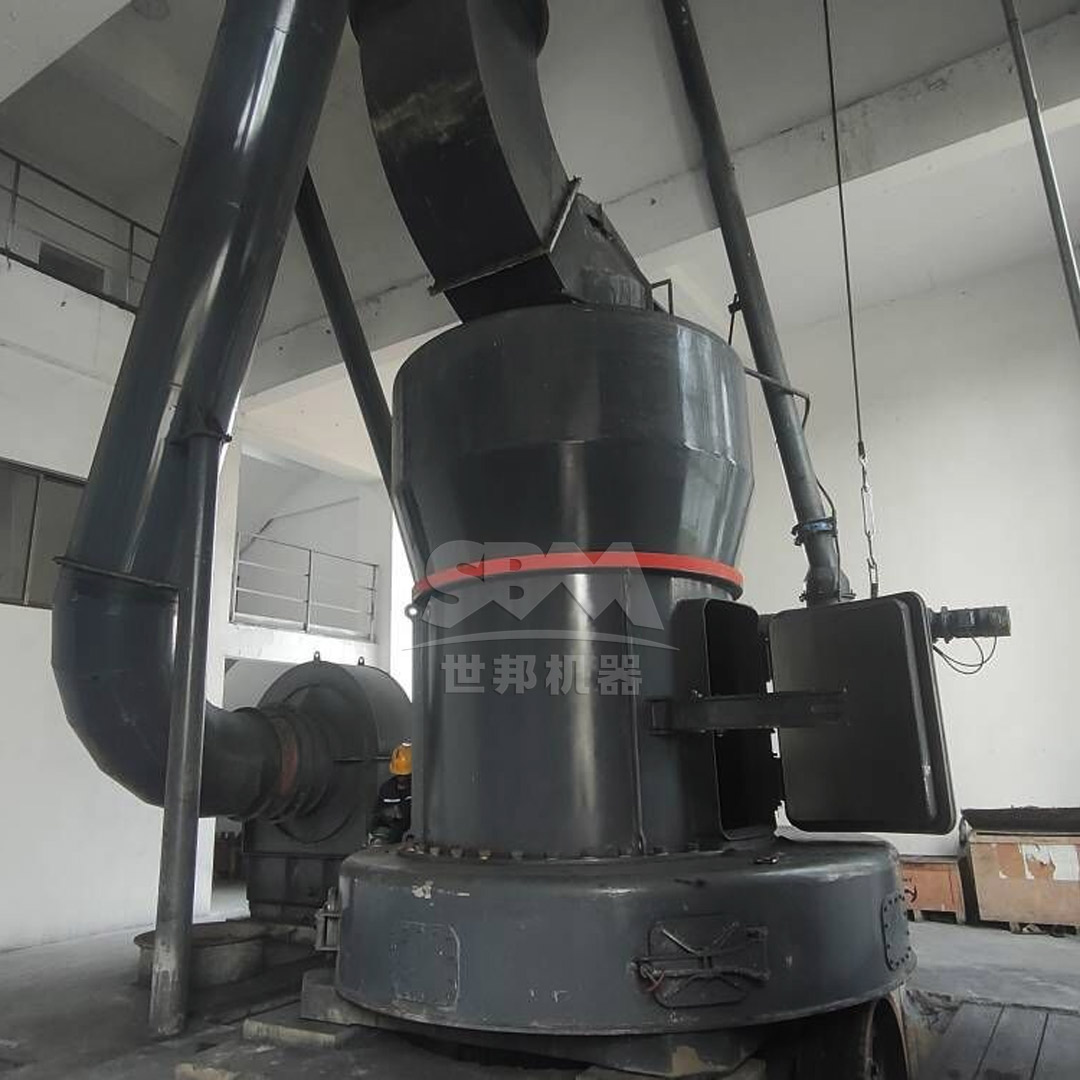
2. Vertical Roller Mill (VRM) / Vertical Mill
An increasingly popular choice for dry grinding applications and pre-grinding in hybrid systems, offering significant energy savings.
- Principle: Material is fed onto a rotating grinding table and crushed under rollers pressed against the table. Ground material is transported by air to an integrated classifier.
- Typical Application: Dry grinding of gold ore for heap leach operations or pre-grinding ahead of a ball mill. Can produce final product in the 45-150μm (325-100 mesh) range.
- Advantages: Substantially higher energy efficiency (30-50% less than ball mills), lower noise levels, compact design, integrated drying for slightly moist feeds, and excellent control over product fineness.
- Limitations: Higher sensitivity to feed size fluctuations and material hardness variations. May require more consistent feed from upstream crushing.
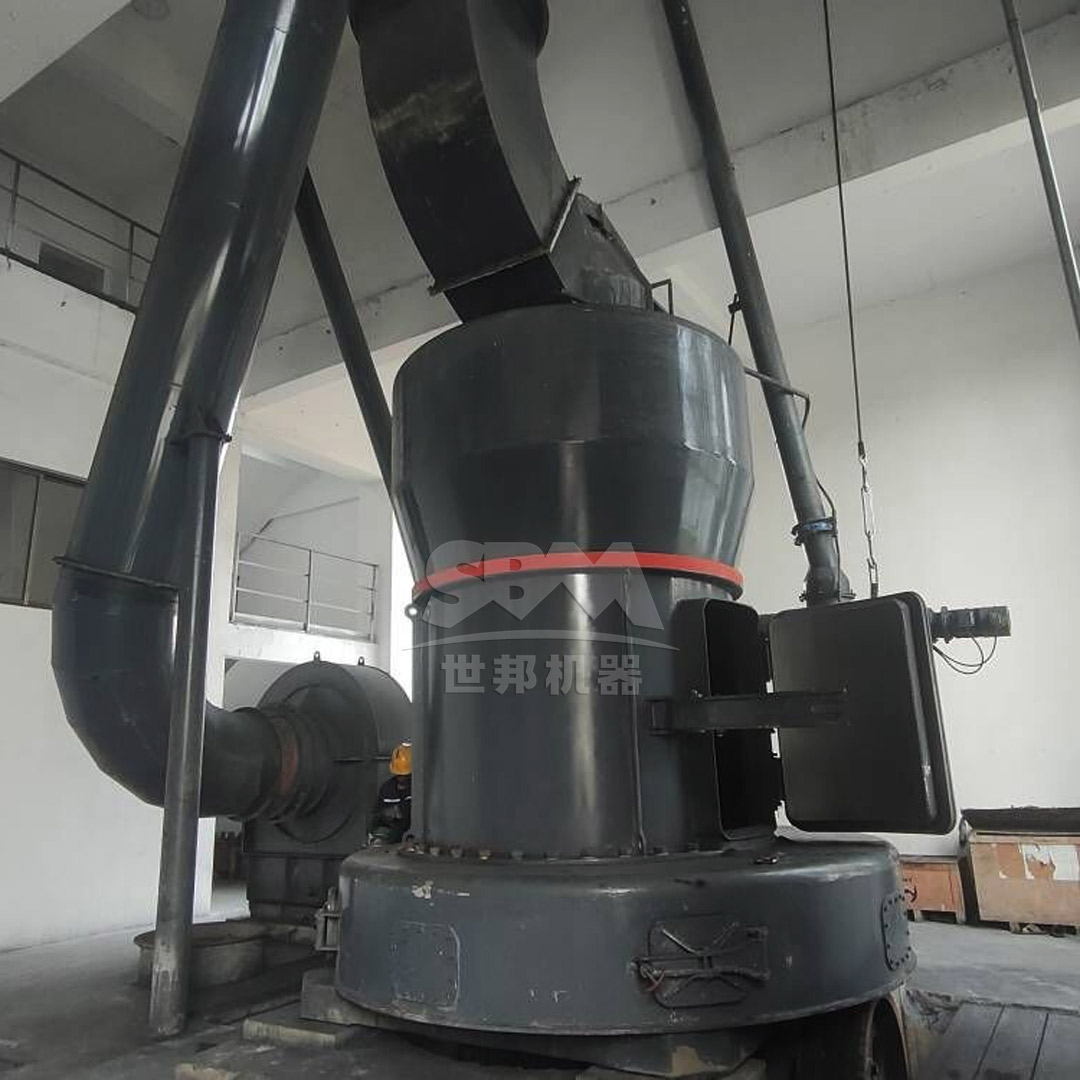
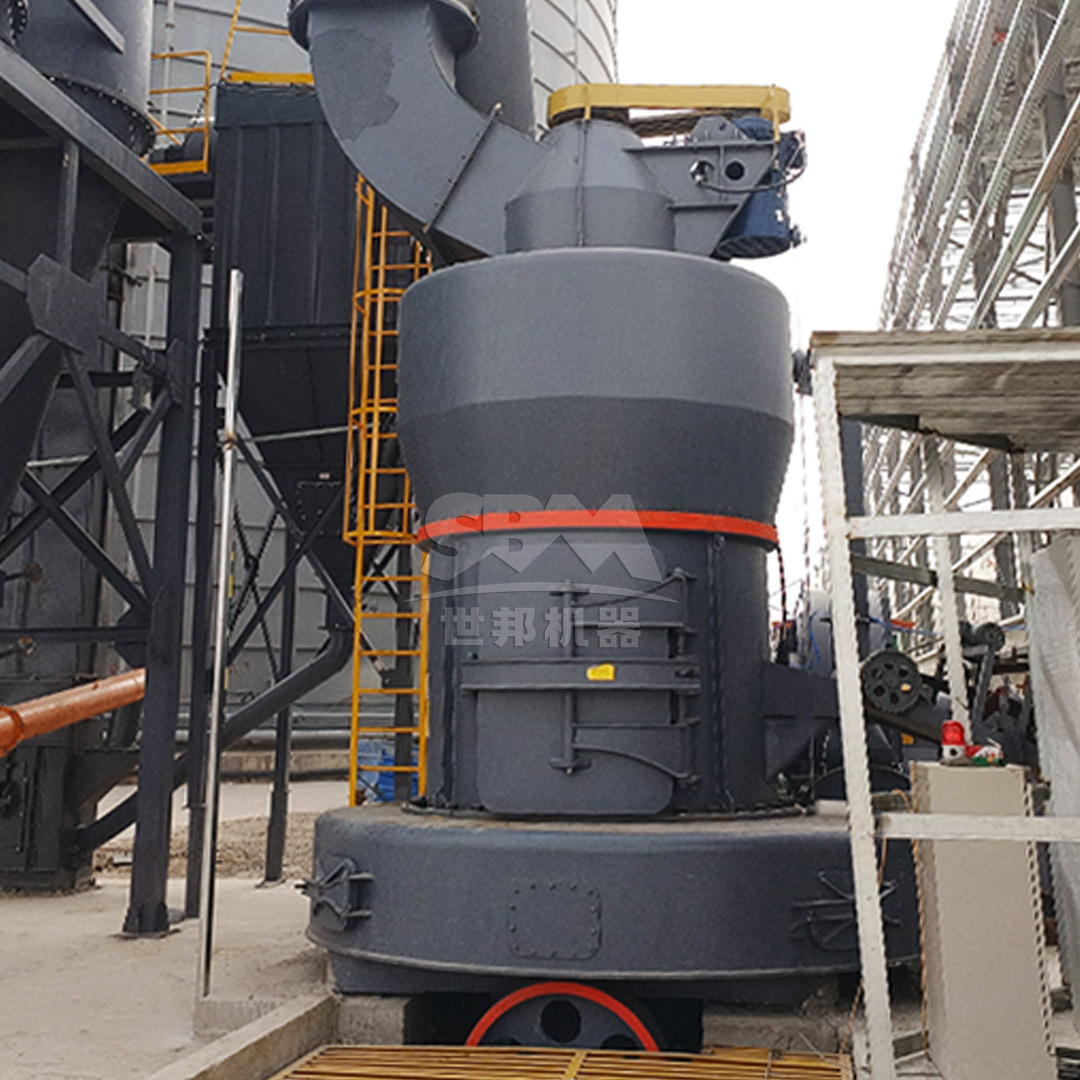
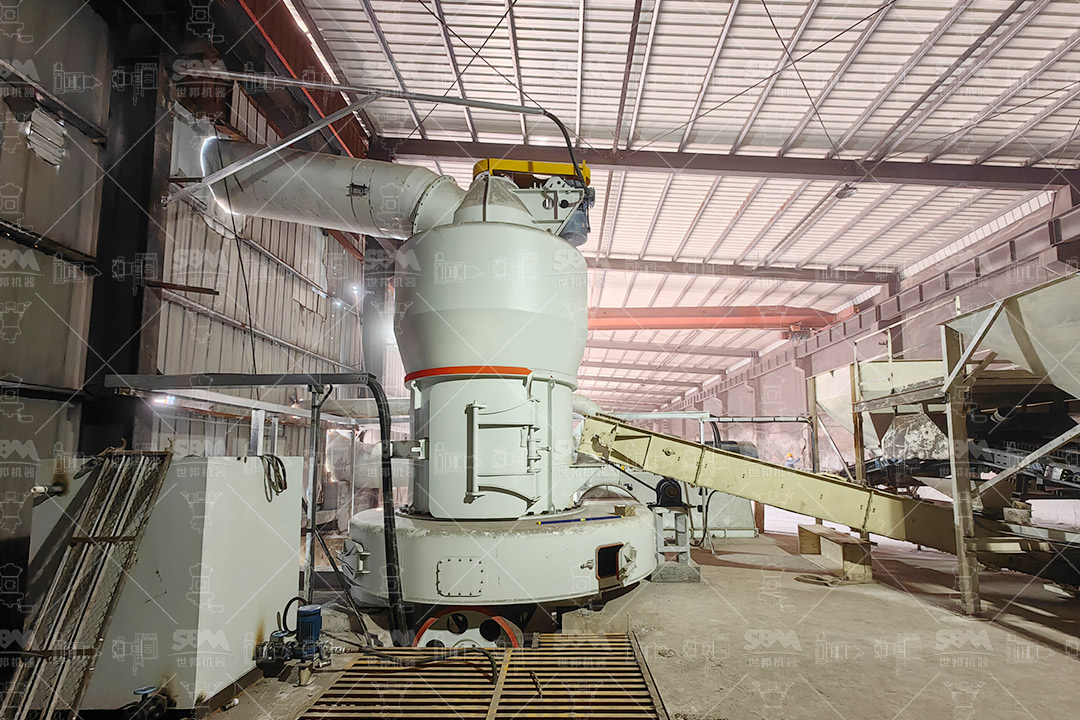
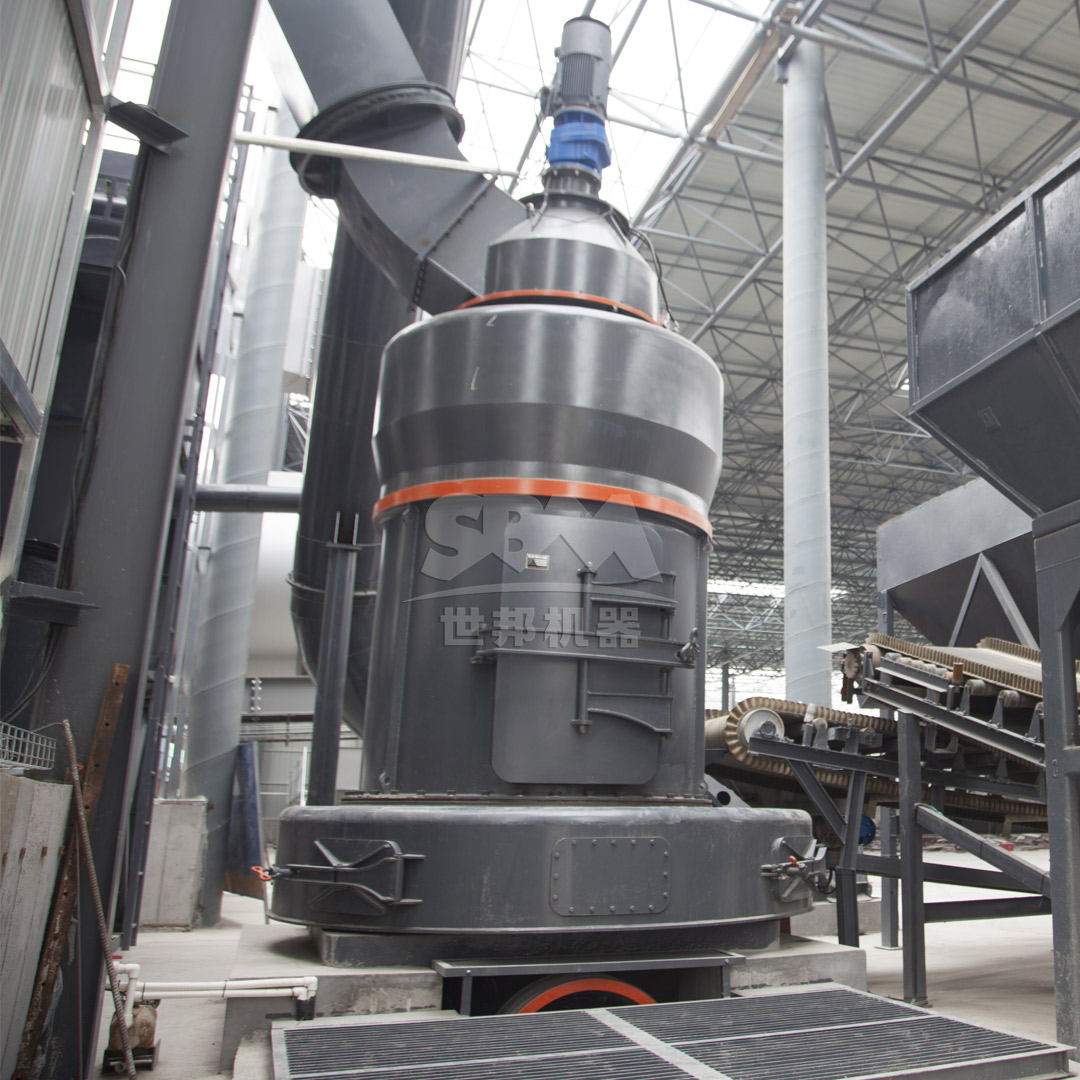
For large-scale gold operations prioritizing energy savings and dry processing, our LM Series Vertical Roller Mill stands out. Its集约化设计 integrates crushing, grinding, and classification in one unit, reducing footprint by 50%. With磨辊与磨盘非接触设计, wear part life is tripled, and its智能控制系统 allows for remote monitoring and stable operation, ensuring consistent grind size crucial for gold recovery. Models like the LM220K (36-105 TPH) are perfectly suited for high-tonnage pre-grinding or final dry grinding circuits.
3. Raymond Mill / Pendulum Roller Mill
A traditional and reliable mill for medium-fine dry grinding.
- Principle: Swing-mounted grinding rollers rotate around a central vertical shaft, pressing against a stationary grinding ring. A blade system feeds the material into the grinding zone.
- Typical Application: Dry grinding to produce powders in the 45-325 mesh (350-45μm) range. Often used in smaller operations or for specific reagent preparation.
- Advantages: Mature technology, stable performance, relatively low capital cost, and easy maintenance.
- Limitations: Lower capacity compared to VRMs and ball mills for the same power input. Product fineness has an upper limit, and it is less efficient for very hard or abrasive materials.
4. Ultra-fine Grinding Mill
Specialized equipment designed to achieve liberation sizes below 20-10 microns, which is sometimes necessary for refractory gold ores or to maximize recovery.
- Principle: Includes advanced mills like Stirred Media Detritors (SMD), IsaMills, and advanced pendulum mills with high-efficiency classifiers. They use intense mechanical agitation of small grinding media to achieve ultra-fine grinding.
- Typical Application: Tertiary or regrind stage for refractory gold concentrates, often after flotation, to liberate locked gold particles.
- Advantages: Capable of producing very fine and uniform particle size distributions (P80 < 15μm), which can significantly enhance gold leaching kinetics.
- Limitations: High specific energy consumption, high media wear costs, and more complex operation and maintenance.
When the liberation size of gold demands ultra-fine grinding, our SCM Series Ultrafine Mill is the optimal solution. It excels in producing powders from 325 to 2500 mesh (45-5μm D97). Its核心优势 lies in the高效节能 design, offering twice the output of jet mills with 30% lower energy consumption. The高精度分级 system with a vertical turbine classifier ensures precise cut-points and a uniform product without coarse particles, which is critical for consistent leach performance. The环保低噪 design, with pulse dust collection exceeding international standards and noise below 75dB, makes it an environmentally sound choice for modern plants.
Selection Guide & Comparative Analysis
The following table provides a high-level comparison to guide initial screening. The final decision must involve detailed test work and feasibility studies.
| Mill Type |
Best For Fineness (P80) |
Typical Capacity |
Grinding Mode |
Key Selection Driver |
| Ball Mill |
75 – 150 μm |
High to Very High |
Wet (Primary) |
High capacity, robust operation, wet circuit standard. |
| Vertical Roller Mill (VRM) |
45 – 150 μm |
Medium to High |
Dry (Primary/Pre-grind) |
Energy savings, dry processing, integrated drying/classification. |
| Raymond Mill |
45 – 350 μm |
Low to Medium |
Dry |
Lower capex, medium-fine dry grinding. |
| Ultra-fine Mill (e.g., SCM) |
5 – 45 μm |
Low to Medium |
Dry |
Ultra-fine liberation requirements, high product uniformity. |
Selection Workflow:
- Define Target: Establish required product fineness (P80) based on metallurgical test work.
- Determine Capacity: Calculate required throughput (TPH) for the plant life.
- Assess Ore & Site: Analyze ore hardness, moisture, and site constraints (water availability, power cost).
- Shortlist Technology: Use the table above to identify 1-2 suitable mill types.
- Conduct Test Work: Perform grindability tests (Bond, JK) and preferably pilot-scale testing with the shortlisted mill types.
- Economic Evaluation: Compare CAPEX, OPEX (focus on $/ton ground), and lifecycle costs for the final options.
Conclusion
There is no universal \”best\” mill for gold ore grinding. The optimal choice is a balance between liberation requirements, production scale, energy efficiency, and total operational cost. While robust ball mills remain the standard for wet grinding circuits, technological advancements in Vertical Roller Mills offer compelling advantages in energy savings for dry or pre-grinding applications. For the increasingly common challenges posed by refractory ores requiring ultra-fine grinding, specialized equipment like ultrafine mills becomes indispensable. A methodical selection process, grounded in comprehensive ore characterization and supported by pilot testing, is essential to investing in a grinding solution that maximizes gold recovery and project profitability for years to come.