
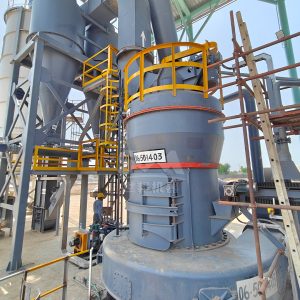
Introduction The selection of appropriate grinding equipment for petroleum coke preparation in lime kiln fuel applications is critical for optimizing combustion efficiency, reducing operational costs, and meeting environmental standards. Petroleum coke, a carbon-rich solid derived from oil refining, requires precise particle size reduction to ensure efficient burning in lime kilns. This comprehensive guide examines the […]
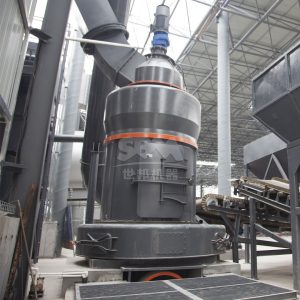
Introduction The production of high-performance refractory cement requires precise control over raw material processing, particularly in the grinding of bauxite. Bauxite, as a primary aluminum-bearing mineral, must be ground to specific particle size distributions to achieve optimal refractory properties including thermal stability, mechanical strength, and corrosion resistance. This article explores the technical considerations for optimizing […]

Graphite Powder Mill: Producing High-Performance Lubricant Additives In the realm of advanced lubricant technology, graphite has emerged as a critical additive that significantly enhances performance characteristics. The production of high-quality graphite powder for lubricant applications requires sophisticated milling technology capable of achieving precise particle size distributions, maintaining material purity, and ensuring consistent production quality. This […]

Introduction to Barite and Its Industrial Significance Barite, or barium sulfate (BaSO₄), is a critical mineral extensively utilized in the chemical industry, particularly as a weighting agent in drilling fluids for oil and gas exploration. The quality of barite powder, specifically its specific gravity, purity, and particle size distribution, directly impacts the performance and safety […]

Introduction Magnesium oxide (MgO) is a crucial industrial mineral with applications spanning refractories, agriculture, pharmaceuticals, and environmental remediation. The quality of MgO is intrinsically linked to the purity and particle size of its precursor material – typically dolomite (CaMg(CO3)2). Producing high-purity, reactive MgO requires the dolomite to be ground to a consistent and exceptionally fine […]

Introduction: The Critical Role of Calcite in Polymer Industries Calcite, a naturally occurring calcium carbonate mineral, serves as one of the most essential functional fillers in rubber and plastic manufacturing. When properly ground to specific particle sizes, calcite enhances mechanical properties, improves dimensional stability, reduces material costs, and provides superior surface finish to polymer products. […]

Introduction: The Critical Role of Quartz Processing in Semiconductor Manufacturing The semiconductor industry operates at the nanoscale, where material purity and consistency are not just desirable attributes but absolute necessities. Quartz, with its exceptional thermal stability, electrical insulation properties, and chemical inertness, serves as a foundational material in semiconductor fabrication. It is used in crucibles […]

Introduction The selection of an appropriate talc pulverizing mill is a critical decision for plastic manufacturers seeking to enhance material properties through mineral reinforcement. Talc, a hydrated magnesium silicate, serves as an excellent filler and reinforcing agent in various polymer matrices, improving stiffness, heat resistance, dimensional stability, and surface quality. However, the effectiveness of talc […]

Introduction to Limestone Powder in Agriculture Agricultural soil conditioning represents one of the most critical applications of mineral processing technology in modern farming practices. Among various soil amendments, limestone powder has emerged as a fundamental solution for addressing soil acidity and improving overall soil health. The effectiveness of limestone powder in agriculture is directly proportional […]