
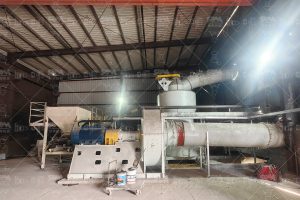
Introduction The cement industry stands at a critical juncture where economic viability must align with environmental responsibility. Clinker grinding, the final stage in cement production, accounts for approximately 40% of the total electrical energy consumption in a typical cement plant. This significant energy footprint, coupled with substantial dust emissions and noise pollution, has made clinker […]
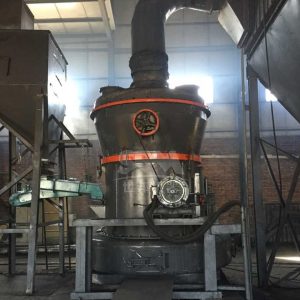
Introduction to Graphite in Thermal Management The demand for efficient thermal management systems has grown exponentially with the advancement of electronic devices, electric vehicles, and high-power industrial equipment. Graphite, with its exceptional thermal conductivity, lightweight properties, and chemical stability, has emerged as a critical material for heat dissipation applications. However, the effectiveness of graphite in […]
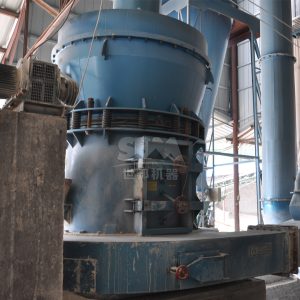
Introduction: The Role of Dolomite in Green Construction The global construction industry is undergoing a significant transformation toward sustainability, with green building materials at the forefront of this revolution. Among these materials, finely ground dolomite has emerged as a crucial component in eco-friendly construction practices. Dolomite, a calcium magnesium carbonate mineral, offers exceptional properties when […]
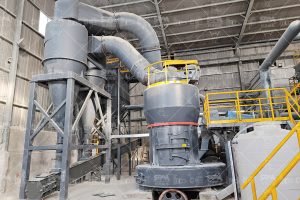
Introduction The production of high-performance coatings demands precise control over pigment particle size and distribution. Carbon black, as one of the most important pigments in the coatings industry, requires ultrafine grinding technology to achieve optimal dispersion, color strength, and stability. This article explores the technical requirements for carbon black grinding and presents advanced milling solutions […]
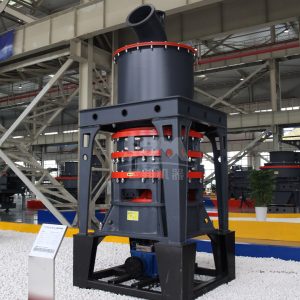
Introduction Feldspar, one of the most abundant minerals in the Earth’s crust, serves as a fundamental raw material in the ceramic tile industry. Its unique properties—including fluxing characteristics, chemical stability, and mechanical strength—make it indispensable for producing high-quality ceramic tiles. The quality of feldspar powder directly influences the final product’s durability, aesthetic appeal, and production […]
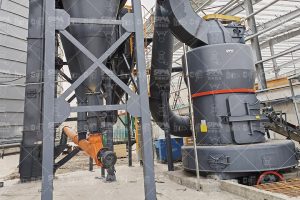
Introduction Solid waste management represents one of the most significant environmental challenges of our time, with industries worldwide seeking effective methods to stabilize and repurpose waste materials. Among various stabilization techniques, the use of bentonite has emerged as a particularly effective solution due to its exceptional swelling capacity, adsorption properties, and chemical stability. However, the […]
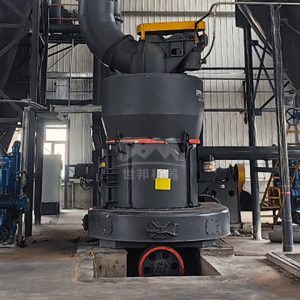
Introduction to Petroleum Coke Grinding in Carbon Anode Production The production of carbon anodes for aluminum smelting represents one of the most demanding applications for petroleum coke grinding technology. Calcined petroleum coke serves as the primary carbon source in anode paste formulation, where particle size distribution directly impacts anode density, electrical conductivity, and mechanical strength. […]
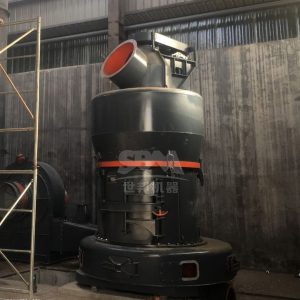
Introduction to Talc as a Polymer Filler Talc, a hydrated magnesium silicate mineral, has become one of the most important functional fillers in the polymer industry due to its unique combination of properties. When properly processed and incorporated into polymer matrices, talc enhances stiffness, heat resistance, dimensional stability, and surface quality while potentially reducing material […]
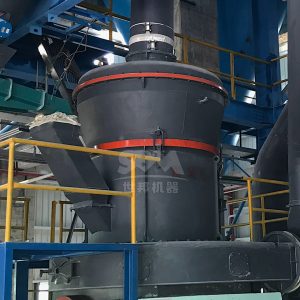
Introduction Calcium carbonate fillers are essential components in numerous industries, including plastics, paper, paints, coatings, and adhesives. The quality of these fillers directly impacts the final product’s properties, making the selection of appropriate grinding equipment and plant configuration crucial. High-quality calcium carbonate fillers require precise particle size distribution, high brightness, and consistent chemical purity. This […]