Attapulgite clay, a hydrated magnesium aluminum silicate mineral with a unique chain-layer crystal structure, has emerged as a highly valued functional pigment in papermaking coatings. Its needle-like morphology, high surface area, and excellent colloidal properties make it indispensable for improving opacity, printability, and ink absorption in coated paper products. However, transforming raw attapulgite clay into a high-quality coating pigment with consistent particle size distribution (PSD), brightness, and rheology requires meticulous processing—particularly in the grinding stage. The choice of grinding mill directly impacts product fineness, particle shape preservation, energy consumption, and overall production economics.
[IMAGE PLACEHOLDER: Attapulgite clay raw ore and processed pigment powder comparison. alt=”Raw attapulgite clay ore and ultrafine coating pigment powder for papermaking”]
In this article, we provide a professional guide for paper mills and mineral processing plants on selecting the right grinding mill for attapulgite clay coating pigment. We will analyze key requirements, compare different mill technologies, and recommend two proven solutions from our company: the SCM Series Ultrafine Mill and the MTW Series European Trapezium Mill. Both have demonstrated exceptional performance in processing non-metallic minerals for paper coating applications.
Before selecting a grinding mill, it is essential to understand the target specifications for papermaking coating pigments. Typical requirements include:
These requirements rule out many conventional mills that rely on impact or attrition crushing, which can destroy the delicate attapulgite structure. Instead, mills based on interparticle grinding or high-efficiency classification are preferred.
Several mill types are used in non-metallic mineral processing, but not all are suitable for attapulgite clay. Let us evaluate the most common options:
Ball mills are widely used for coarse to fine grinding (down to 0.074 mm). While robust and capable of large capacities (up to 450 t/h), they are energy-intensive and tend to produce a broad PSD. The high-impact action can also damage the needle-like structure of attapulgite, reducing its aspect ratio. Therefore, ball mills are generally not recommended for ultrafine coating pigment unless followed by a classification step.
Hammer mills are suitable for coarse crushing (0–3 mm) and pre-grinding. They are not applicable for ultrafine grinding required for coating pigments.
Jet mills can achieve very fine grinding (down to 1–5 μm) without contamination, but their capacity is limited (typically below 2 t/h) and energy consumption is high—often 2–3 times that of mechanical mills. For large-scale attapulgite processing, jet mills are not cost-effective.
Vertical roller mills, such as our LM series, are excellent for large-capacity grinding (up to 250 t/h) and offer low energy consumption. However, they are generally used for materials with lower fineness requirements (30–325 mesh). For ultrafine coating pigments (down to 5 μm), a specialized ultrafine vertical mill like the LUM series is needed, but its capacity is relatively modest (1.6–15 t/h).
Pendulum mills, including our MTW and MTM series, are versatile and can grind to 325 mesh (45 μm) with capacities up to 45 t/h. They are robust and easy to maintain, making them a good choice for medium-fine coating pigments.
The SCM series ultrafine mill is specifically designed for producing fine and ultrafine powders (325–2500 mesh) with a precise top-cut. It combines high capacity (up to 25 t/h) with low energy consumption and excellent particle shape preservation. This makes it an ideal candidate for attapulgite clay coating pigment.
[IMAGE PLACEHOLDER: Comparison of particle size distribution curves from different mills. alt=”Particle size distribution curves comparing ball mill, jet mill, and SCM ultrafine mill for attapulgite clay”]
Selecting the optimal grinding mill for attapulgite clay coating pigment involves several critical factors:
Determine the required top size (e.g., d97 = 10 μm or 20 μm) and the desired PSD width. For coating pigments, a narrow PSD is crucial for consistent coating thickness and print quality. Mills with high-precision classifiers (e.g., turbine classifiers) are preferred.
Calculate the required hourly output based on paper machine coating demand. Small-scale specialty lines may need 0.5–2 t/h, while large paper mills may require 10–25 t/h. The mill’s capacity must match without compromising fineness.
Energy is a major operating cost. Mills that achieve higher capacity per kW are more economical. For example, the SCM series offers 2x the capacity of jet mills with 30% lower energy consumption.
Attapulgite clay is abrasive. Mills with wear-resistant materials (e.g., special alloy rollers and rings) and easy maintenance features (e.g., thin oil lubrication) reduce downtime and cost.
Contamination from grinding media can affect brightness and coating performance. Mills with minimal metal-to-material contact (e.g., ceramic liners or special alloys) are beneficial.
Dust and noise emissions must meet regulations. Look for mills with efficient pulse dust collectors and soundproof designs.
Intelligent control systems with automatic granularity feedback ensure stable product quality and reduce manual intervention.
By following these steps, you can narrow down the mill options. In our experience, the SCM series and MTW series are the most suitable for attapulgite clay coating pigment, each with distinct advantages.
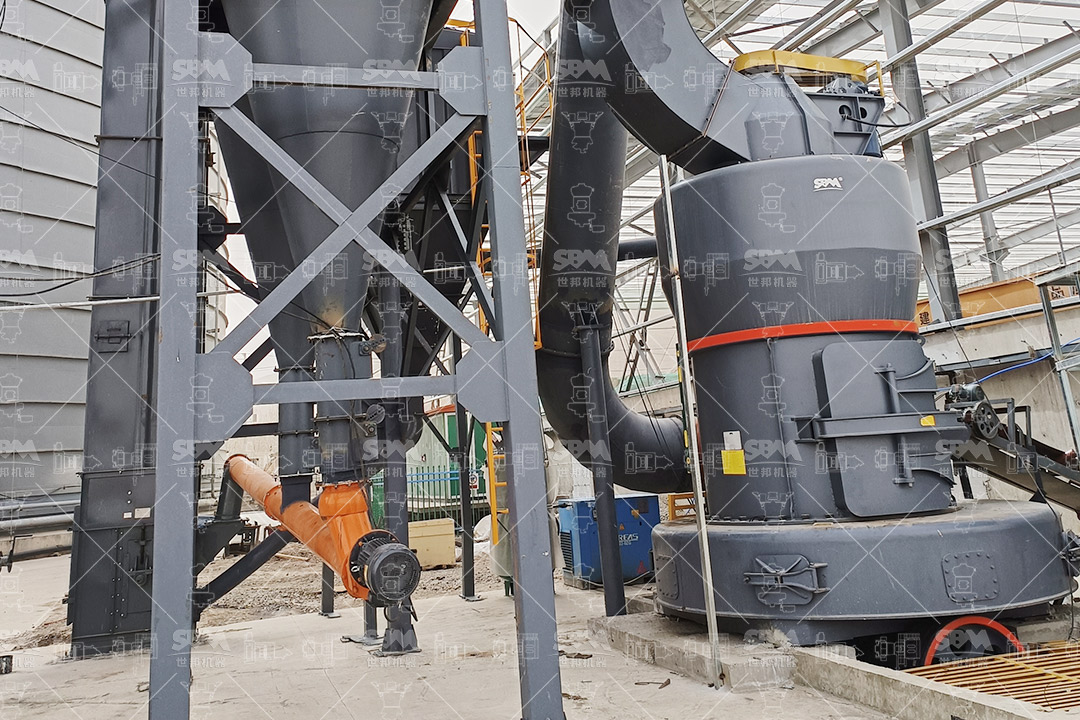
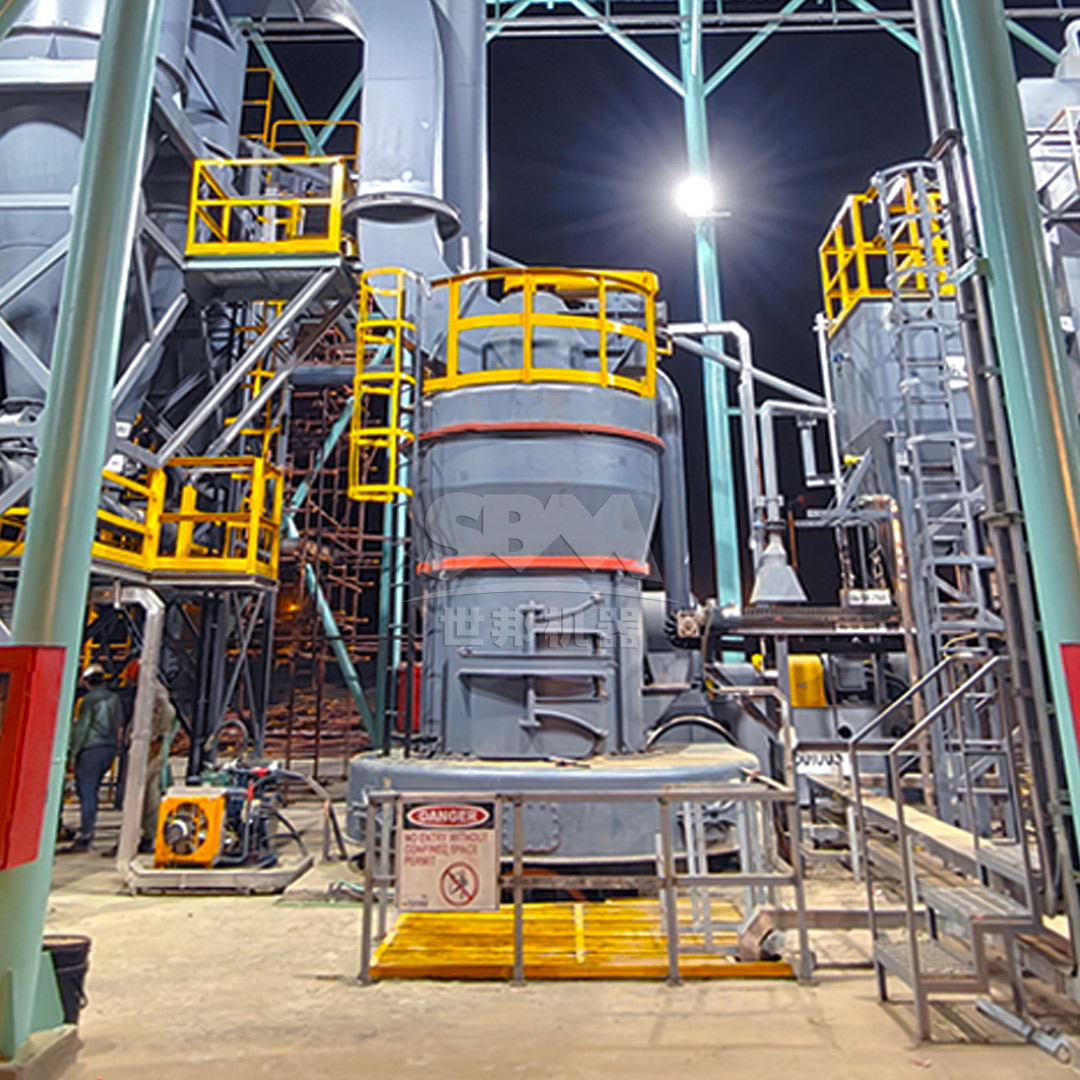
The SCM Series Ultrafine Mill is our flagship product for ultrafine grinding of non-metallic minerals. It is specifically engineered for producing coating pigments with fineness from 325 to 2500 mesh (45–5 μm) and capacities from 0.5 to 25 t/h. Its technical advantages make it an excellent choice for attapulgite clay:
The main motor drives three layers of grinding rings to rotate. Materials are dispersed into the grinding path by centrifugal force, crushed by roller pressure, and ground layer by layer. Finally, powder collection is completed by a cyclone collector and a pulse dust removal system.
| Model | Capacity (t/h) | Main Power (kW) | Feed Size (mm) | Fineness (mesh) |
|---|---|---|---|---|
| SCM800 | 0.5-4.5 | 75 | 0-20 | 325-2500 |
| SCM900 | 0.8-6.5 | 90 | 0-20 | 325-2500 |
| SCM1000 | 1.0-8.5 | 132 | 0-20 | 325-2500 |
| SCM1250 | 2.5-14 | 185 | 0-20 | 325-2500 |
| SCM1680 | 5.0-25 | 315 | 0-20 | 325-2500 |
With its ability to produce ultrafine, uniform particles while preserving the acicular structure, the SCM series is ideal for high-grade attapulgite coating pigments. Its energy efficiency and large capacity also make it a cost-effective solution for large paper mills.
[IMAGE PLACEHOLDER: SCM Series Ultrafine Mill in operation at a mineral processing plant. alt=”SCM Series Ultrafine Mill grinding attapulgite clay for paper coating pigment”]
For medium-fine grinding (30–325 mesh, down to 0.038 mm), the MTW Series European Trapezium Mill offers an excellent combination of capacity, efficiency, and reliability. It is well-suited for producing attapulgite clay coating pigments where a top size of 45 μm (325 mesh) is acceptable, or as a pre-grinding step before ultrafine milling. Capacities range from 3 to 45 t/h.
The main motor drives the grinding rollers to revolve around the central axis while self-rotating to generate centrifugal force. Shovels throw materials between the ring and rollers to form a material layer, achieving efficient crushing through extrusion. The classification system precisely controls the finished product size.
| Model | Capacity (t/h) | Main Power (kW) | Feed Size (mm) | Fineness (mesh) |
|---|---|---|---|---|
| MTW110 | 3-9 | 55 | <30 | 10-325 |
| MTW138Z | 6-17 | 90 | <35 | 10-325 |
| MTW175G | 9.5-25 | 160 | <40 | 10-325 |
| MTW215G | 15-45 | 280 | <50 | 10-325 |
The MTW series is a robust and versatile choice for attapulgite clay processing. Its high transmission efficiency and wear-resistant design ensure low operating costs, while the precise classifier guarantees consistent product quality. For paper mills requiring a reliable medium-fine pigment, the MTW mill is an excellent investment.
To aid in the decision-making process, the following table summarizes the key differences between the SCM and MTW series for attapulgite clay coating pigment.
| Criteria | SCM Series Ultrafine Mill | MTW Series European Trapezium Mill |
|---|---|---|
| Fineness Range | 325–2500 mesh (45–5 μm) | 30–325 mesh (600–45 μm) |
| Capacity Range | 0.5–25 t/h | 3–45 t/h |
| Energy Consumption | Very low (30% lower than jet mill) | Low |
| Particle Shape Preservation | Excellent (layer grinding) | Good |
| Maintenance | Long wear part life; easy access | Combined shovel blades; low maintenance |
| Best Application | Ultrafine coating pigments (d97 ≤ 20 μm) | Medium-fine pigments or pre-grinding |
For premium coating pigments requiring ultrafine grinding, the SCM series is the clear winner. For medium-fine grades or when a larger capacity is needed with less stringent fineness, the MTW series is more economical.
A leading paper mill in Asia recently installed an SCM1250 ultrafine mill to produce attapulgite clay coating pigment. The target specifications were d97 = 15 μm, brightness ≥ 88%, and capacity of 10 t/h. After commissioning, the mill achieved:
The mill has been running for over 10,000 hours with minimal maintenance, confirming the durability of the SCM series.
[IMAGE PLACEHOLDER: Coated paper samples showing improved opacity and print quality with attapulgite pigment. alt=”Coated paper samples using attapulgite clay pigment processed by SCM ultrafine mill”]
Choosing the right grinding mill for attapulgite clay coating pigment is a critical decision that affects product quality, production efficiency, and profitability. The key is to match the mill’s capabilities with your specific fineness, capacity, and budget requirements. Based on our extensive experience in non-metallic mineral processing, we confidently recommend:
Both mills are backed by our patented technology, global service network, and commitment to environmental compliance. By selecting the appropriate mill, paper mills can unlock the full potential of attapulgite clay as a high-performance coating pigment, enhancing paper quality and reducing production costs.
For more information or to request a quotation, please contact our technical team. We will help you conduct material tests and select the optimal mill for your attapulgite clay processing line.