Attapulgite, a hydrated magnesium aluminum silicate clay mineral with a unique needle-like crystal structure, has become an indispensable functional additive in the production of dye suspension agents. Its high surface area, thixotropic properties, and excellent colloidal stability make it ideal for preventing pigment settling, controlling viscosity, and ensuring uniform color dispersion in textile, ink, and coating applications. However, to fully exploit the performance benefits of attapulgite in dye suspensions, the raw clay must be processed into a fine, uniform powder with controlled particle size distribution. This is where selecting the right grinding mill becomes a decisive factor for product quality, operational efficiency, and cost-effectiveness.
Attapulgite processing typically involves crushing, drying, grinding, and classification. The grinding stage is the most energy-intensive and directly influences the rheological behavior of the final suspension agent. Mills that produce narrow particle size distributions without over-grinding or introducing contaminants are essential. Additionally, because attapulgite is a fibrous mineral, excessive mechanical stress can damage its crystal structure, reducing its thickening ability. Therefore, the choice of grinding equipment must balance fineness, capacity, energy consumption, and preservation of the mineral’s inherent properties.
Dye suspension agents generally require attapulgite powders with a fineness between 200 and 1250 mesh (approximately 74 to 10 μm), depending on the desired suspending power and rheology. For high-performance suspensions, ultrafine grinding down to 5–45 μm is often necessary. The mill must deliver a consistent top-cut size and minimize coarse particles, which can cause sedimentation and nozzle clogging. Air classifiers integrated with the mill should provide precise cut points.
The fibrous structure of attapulgite is responsible for its unique gelling and suspending properties. Grinding methods that rely on high-impact forces (e.g., ball mills or hammer mills) may fracture the fibers, leading to reduced viscosity and suspension stability. Instead, mills that employ shear, compression, or attrition with controlled energy input—such as vertical roller mills or ultrafine mills—are preferred to maintain the aspect ratio of the crystals.
Industrial production of dye suspension agents may range from a few tons per hour to over 50 tons per hour. The mill must be scalable to match the production line without sacrificing fineness. Modular designs and models with adjustable parameters allow for flexible adaptation to different grades of attapulgite and market demands.
Grinding is the largest energy consumer in attapulgite processing. Mills with high grinding efficiency, such as vertical roller mills and advanced pendulum mills, can reduce energy consumption by 30–50% compared to traditional ball mills. Lower wear rates also translate to reduced maintenance and replacement costs, especially when processing abrasive clays.
Dye suspension agents must be free from metal contamination that could alter color or interfere with dye chemistry. Mills with wear-resistant liners and grinding elements made from ceramic or special alloys minimize iron pickup. Additionally, dust collection systems must be efficient to prevent product loss and maintain a clean working environment.
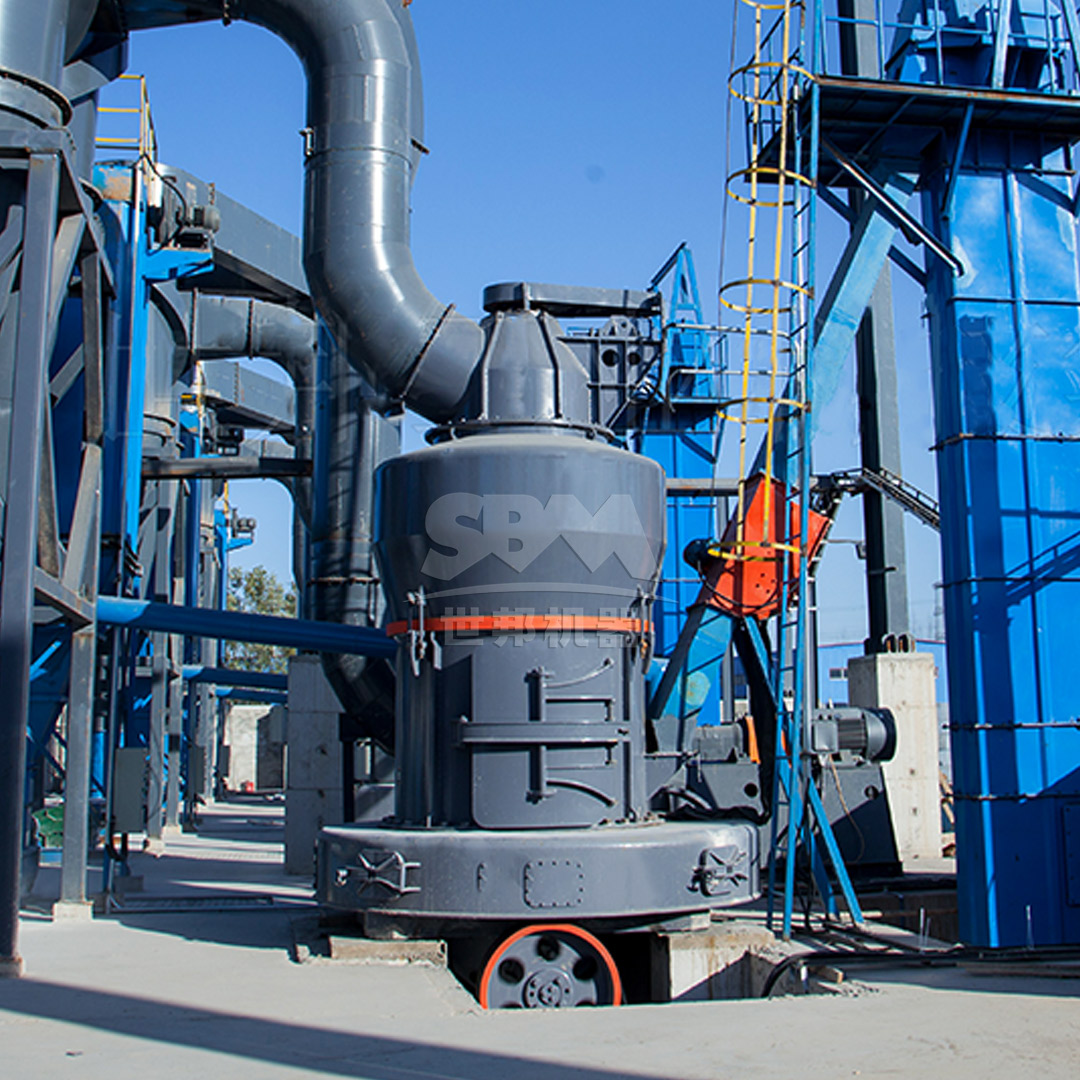
Based on the specific requirements of attapulgite processing for dye suspension agents, we recommend two of our most advanced milling solutions: the SCM Series Ultrafine Mill and the MTW Series European Trapezium Mill. Both are engineered to deliver superior performance, precise fineness control, and operational reliability, making them ideal choices for this application.
The SCM Series Ultrafine Mill is a state-of-the-art solution for producing ultrafine attapulgite powders with fineness ranging from 325 to 2500 mesh (45–5 μm). Its vertical turbine classifier ensures precise particle size cutting, eliminating coarse powder mixing and guaranteeing a uniform finished product. This is critical for dye suspension agents, where consistency directly affects viscosity and stability.
With a capacity of 0.5 to 25 tons per hour, the SCM mill can be scaled to meet various production volumes. The intelligent control system provides automatic feedback on finished product granularity, allowing operators to maintain tight specifications with minimal intervention. Energy consumption is significantly reduced—30% lower than jet mills—while capacity is doubled, offering a rapid return on investment.
Durability is another hallmark of the SCM Series. Special material rollers and rings extend service life several times over, and the shaftless screw grinding chamber ensures stable operation even with fibrous materials like attapulgite. The pulse dust collection system exceeds international standards, ensuring a clean and eco-friendly production environment. Noise levels are kept low thanks to a soundproof room design.
| Model | Capacity (t/h) | Main Power (kW) | Feed Size (mm) | Fineness (mesh) |
|---|---|---|---|---|
| SCM800 | 0.5-4.5 | 75 | 0-20 | 325-2500 |
| SCM900 | 0.8-6.5 | 90 | 0-20 | 325-2500 |
| SCM1000 | 1.0-8.5 | 132 | 0-20 | 325-2500 |
| SCM1250 | 2.5-14 | 185 | 0-20 | 325-2500 |
| SCM1680 | 5.0-25 | 315 | 0-20 | 325-2500 |
For applications requiring fineness between 30 and 325 mesh (down to 0.038 mm), the MTW Series European Trapezium Mill is an excellent choice. Its anti-wear shovel design and curved grinding rollers reduce maintenance costs and extend service life, while the optimized arc air duct minimizes airflow energy loss and improves transmission efficiency. The integral bevel gear drive achieves 98% transmission efficiency, saving space and reducing installation costs.
The MTW mill’s wear-resistant volute structure features a non-resistance flow design that enhances air selection efficiency and reduces maintenance costs by 30%. The classification system precisely controls the finished product size, ensuring that the attapulgite powder meets the strict requirements of dye suspension agents. With capacities from 3 to 45 tons per hour, the MTW Series can handle large-scale production with ease.
| Model | Capacity (t/h) | Main Power (kW) | Feed Size (mm) | Fineness (mesh) |
|---|---|---|---|---|
| MTW110 | 3-9 | 55 | <30 | 10-325 |
| MTW110Z | 3-10 | 55 | <30 | 10-325 |
| MTW138Z | 6-17 | 90 | <35 | 10-325 |
| MTW175G | 9.5-25 | 160 | <40 | 10-325 |
| MTW215G | 15-45 | 280 | <50 | 10-325 |
Both the SCM and MTW Series are equipped with advanced pulse dust removal technology and can be configured with wear-resistant liners to minimize iron contamination. They represent the pinnacle of our milling technology, designed to meet the exacting demands of the dye and pigment industry.
When choosing between the SCM and MTW Series for attapulgite processing, consider the following factors:
For most dye suspension agent producers, a combination of both mills may be optimal: the MTW Series for pre-grinding or medium-fine grades, and the SCM Series for ultrafine grades that demand the highest suspending power. Our engineers can assist in designing a complete processing line tailored to your specific attapulgite source and product specifications.
Selecting the right grinding mill for attapulgite processing is a strategic decision that impacts product quality, production efficiency, and profitability. The unique properties of attapulgite—its fibrous structure and thixotropic behavior—demand gentle yet effective grinding that preserves its crystal morphology while achieving the desired fineness. The SCM Series Ultrafine Mill and MTW Series European Trapezium Mill from our company represent the best-in-class solutions for this application. With their advanced classification, energy efficiency, durability, and eco-friendly operation, they empower manufacturers to produce superior dye suspension agents that meet the most stringent performance standards. By investing in the right equipment, you ensure that your attapulgite-based suspension agents deliver consistent, reliable results, batch after batch.